

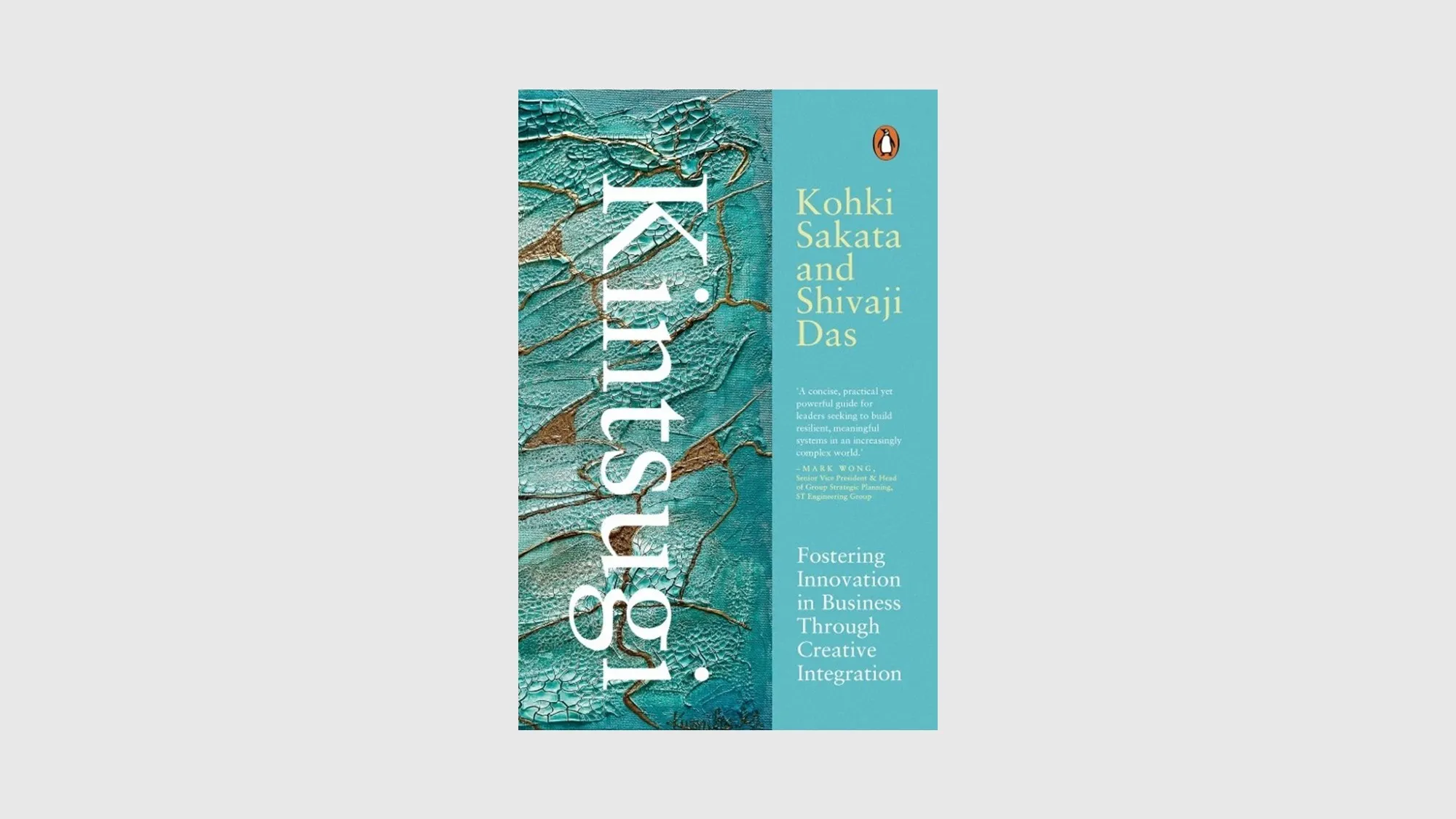
In October 2026, IGPI Group Partner Kohki Sakata and IGPI Singapore Managing Director Shivaji Das published their co-authored book, Kintsugi: Fostering Innovation in Business Through Creative Integration, with Penguin Business. Drawing on the authors’ decades of experience working with companies across Japan and Asia, the book challenges a widely held assumption: that innovation requires replacing what already exists.
Inspired by Kintsugi, the Japanese art of repairing broken pottery with gold, the book introduces creative integration as an approach to business innovation that creates new value by connecting existing capabilities, technologies, and ecosystems rather than discarding them.
This article examines why creative integration matters now and how it can reshape the way business leaders approach innovation strategy and business transformation.
Must Innovation Destroy the Old?
For decades, innovation has been closely associated with creative destruction, a concept popularised by economist Joseph Schumpeter. New technologies replace old ones. New business models displace established players. Companies are encouraged to disrupt their industries before someone else does. Creative destruction has played a significant role in driving economic progress.
Yet this perspective raises an important question: Must innovation always come at the expense of what already exists?
Today, many business challenges cannot be solved simply by replacing old systems with new ones. Ageing infrastructure, fragmented supply chains, organisational silos, and changing customer expectations often require companies to make better use of capabilities they have already accumulated. Digital technologies have fundamentally changed what is possible. Information, services, and physical assets can now be connected and recombined without rebuilding everything from scratch.
The opportunity is no longer limited to creating something entirely new. It also lies in discovering new combinations of what already exists to drive innovation and create sustainable business value.
Kintsugi: Turning Imperfection into Value
Kintsugi is a traditional Japanese technique for repairing broken pottery using lacquer and gold. Rather than concealing the cracks, the technique highlights them, transforming what was once considered damage into a distinctive feature of the object. The repaired pottery retains its history while acquiring new value.
This philosophy offers a compelling lens through which to reconsider business innovation and transformation.
Companies accumulate valuable assets over time—not only factories, technologies, and brands, but also relationships, operational knowledge, and organisational capabilities. Some may appear outdated or inefficient, yet replacing them entirely can mean losing strengths that have taken decades to develop.
Kintsugi encourages leaders to look beyond these apparent imperfections and ask what remains valuable, what needs to change, and how existing strengths can be combined with new capabilities. Kintsugi is not simply a philosophy of repair or resilience. It is a philosophy of business growth and innovation through creative integration.
Creative Integration in Practice: Lessons from Asia
Across Asia, companies are demonstrating how new value can emerge from connecting fragmented or underutilised resources through creative integration.
Consider Grab, one of Southeast Asia’s leading digital platforms. Grab did not invent transportation, food delivery, or financial services. Instead, it connected existing drivers, local merchants, consumers, and service providers through digital technology. By adapting to local market conditions and integrating previously fragmented activities, Grab developed an ecosystem that created greater convenience and economic opportunity. Its innovation lay not only in technology, but in how it brought existing participants together.
A different example comes from Japan’s regional transportation sector. Michinori Holdings, established by IGPI, has worked to revitalise struggling regional bus operators facing declining populations and deteriorating profitability. Rather than abandoning existing transportation networks, Michinori has combined operational restructuring, digital technologies, and collaboration with local communities to develop more sustainable mobility solutions.
Although these businesses operate in very different industries, they share a common approach: identifying value in existing assets and creating new opportunities by reconnecting them. Their experiences suggest that competitive advantage can come not only from what a company owns or develops, but from how effectively it connects the resources around it.
Why Creative Integration Matters in the Age of AI
The rapid advancement of AI makes this approach particularly relevant. AI can analyse information, optimise processes, and automate tasks at unprecedented speed.
Yet technology alone does not determine how value is created. Business challenges are embedded in specific organisations, industries, and communities. They involve established relationships, operational constraints, cultural differences, and institutional structures that cannot simply be replaced by technology.
For established companies, this presents an important opportunity. Their accumulated knowledge, customer relationships, physical infrastructure, and operational expertise can become powerful sources of competitive advantage when combined with AI and other digital capabilities. The challenge is therefore not simply to introduce the latest technology. It is to understand how technology can strengthen existing capabilities and connect activities that previously operated in isolation.
This calls for a shift in how leaders approach transformation. Rather than focusing primarily on replacement and restructuring, leaders must learn to identify overlooked strengths, foster collaboration across organisational boundaries, and bring different capabilities together to create new value.
Creative destruction will remain relevant in certain circumstances, but it should not be the default approach to every transformation. In the age of AI, the ability to integrate existing capabilities and technologies may become just as important as the ability to invent.
About the Book
The ideas discussed in this article reflect a central theme of Kintsugi: Fostering Innovation in Business Through Creative Integration.
Drawing on case studies from Japan, Southeast Asia, India, and China, the book examines how organisations can transform fragmented systems and legacy capabilities into new sources of business value and competitive advantage. It also offers practical approaches for identifying opportunities for integration, designing connections across organisational boundaries, and building cultures that support continuous adaptation. The book is neither an argument against disruption nor an appeal to preserve the past for its own sake. Rather, it invites leaders to reconsider how innovation happens and to recognise the potential that already exists within their organisations and ecosystems.
We hope the book will provide a useful perspective for business leaders seeking to build more resilient organisations and create sustainable competitive advantages through innovation. The future of innovation may depend less on what we destroy and more on what we learn to reconnect.
[Book Information]
Kintsugi: Fostering Innovation in Business Through Creative Integration
- Authors:
– Kohki Sakata (IGPI Group Partner & IGPI Singapore CEO)
– Shivaji Das (IGPI Singapore Managing Director) - Publisher: Penguin Business (Penguin Random House SEA)
- Publication date: October 2026
- Language: English
- ISBN: 9789815351873