

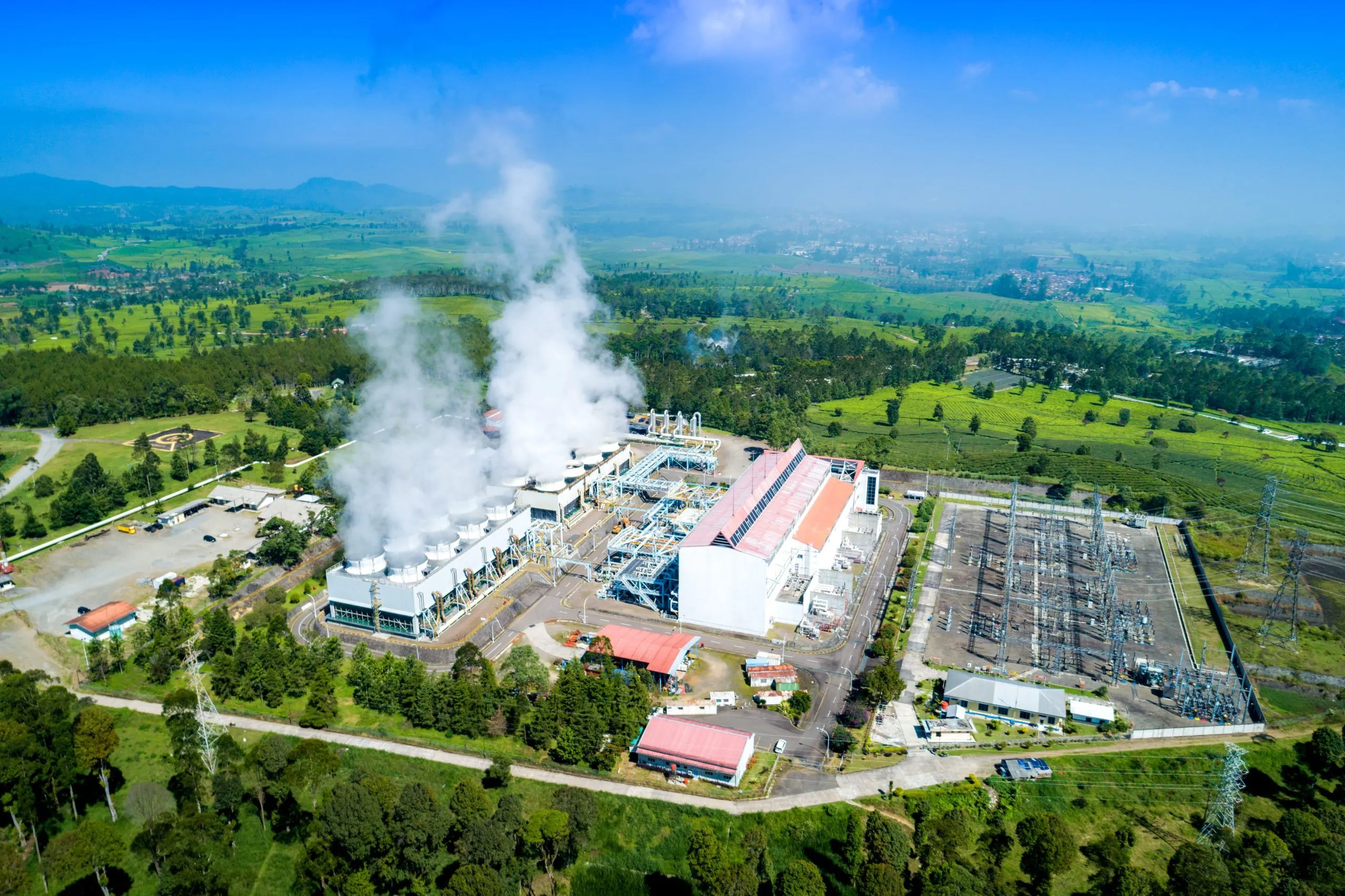
Vietnam currently finds itself at a historic crossroads in its energy transition journey. As one of the world’s most dynamic economies, Vietnam’s energy demand is rapidly expanding, with demand climbing by 10-12% annually. However, the backbone of this growth remains carbon-intensive; coal-fired power still accounts for nearly 50% of Vietnam’s energy mix, creating significant decarbonization challenges. This leaves the “Dragon” of Southeast Asia facing a difficult dual challenge: sustaining its rapid industrial ascent while navigating the complex transition toward its ambitious Net Zero 2050 commitment.
For Vietnam, decarbonization and clean energy adoption are not merely environmental goal, it is an economic imperative to remain competitive in a global supply chain increasingly defined by ESG standards. In this high-stakes transition, Japan has emerged as Vietnam’s most strategic partner for green technology and sustainable energy development. The Vietnam-Japan synergy is moving beyond simple bilateral trade, but transforming into a scalable blueprint for sustainability and energy security across the ASEAN region.
The Vietnam Platform: A Strategic Proving Ground and Policy Co-Creator
Rather than viewing Vietnam merely as an export destination, Japanese companies increasingly see Vietnam as a strategic validation ground for energy transition technologies. As a quintessential emerging market, Vietnam closely mirrors the structural bottlenecks of the broader ASEAN region: surging industrial load growth, deep-rooted coal dependency, and severe grid congestion. If a green technology can thrive amidst Vietnam’s rapid industrial growth and complex regulatory environment, it possesses the resilience required for broader deployment across emerging markets.
Many Japanese firms are leveraging this first-mover advantage to pioneer solutions that balance economic stability with carbon reduction. Instead of the immediate, disruptive closure of coal plants, which could jeopardize national grid stability, major energy players like JERA and IHI are proposing a phased transition through ammonia co-firing, preventing billions of dollars in stranded assets. Similarly, erex Co.,Ltd.’s biomass power projects and TBM Co., Ltd.’s upcycling of industrial flue gas showcase deep circular economy integration, turning waste into reliable base-load energy and high-value materials.
Furthermore, Vietnam is shifting from a mere technology recipient to a policy co-creator, demonstrating a willingness to adopt advanced regulatory architectures typically reserved for mature, developed energy markets. A prime indicator of this regulatory leapfrog is the recent issuance of Circular No. 62/2025/TT-BCT at the end of 2025, which introduces a sophisticated two-part tariff structure for Battery Energy Storage Systems (BESS). By decoupling capacity availability from energy throughput, this framework transforms energy storage from a technical experiment into a bankable, revenue-generating asset class. This progressive policy environment creates an immediate strategic window for Japanese frontrunners like Marubeni. Already collaborating with domestic ecosystem leaders like VinFast and Vinpearl to pilot commercial BESS solutions, Marubeni is well-positioned to capitalize on this advanced pricing mechanism, setting a new benchmark for grid-scale storage deployment across ASEAN.
The Japanese Edge: Blended Finance, Soft-Tech, and Strategic Patience
While many Western-led renewable mega-projects—such as offshore wind—have recently stalled in Vietnam due to rigid commercial financing expectations and regulatory friction, notably punctuated by the exit of European giants like Orsted and Equinor, Japanese players are securing long-term traction through strategic patience and a sophisticated, integrated approach.
Their success is anchored in a Triple-Win Model that seamlessly integrates Japanese sovereign capital and corporate technological expertise with the on-the-ground execution capabilities of local national champions.
On the financial front, these firms utilize innovative blended finance models. By combining concessional G2G funds (like the Joint Crediting Mechanism, JBIC, or JICA) with international development capital—such as from the ADB, the IFC, and private equity—they create a robust financial buffer that heavily de-risks high-cap projects. Operationally, by pairing this financial engineering with the influence of domestic leaders like PetroVietnam, EVN, or Sovico Group, these joint ventures efficiently navigate the administrative complexities and land acquisition hurdles that often deter foreign investment.
Beyond robust financial and operational structuring, the true differentiator is systemic. Crucially, Japan’s strategy extends far beyond merely exporting physical hard-tech like machinery and turbines; it is actively embedding soft-tech—the regulatory operating systems and smart grid frameworks that underpin their deployment. As a founding and most active member of the Asia Zero Emission Community (AZEC), Vietnam acts as Japan’s primary strategic partner in shaping the regional green political architecture. This framework aligns closely with broader international initiatives like the Just Energy Transition Partnership (JETP), making the Vietnam-Japan synergy the vanguard of a stable, sustainable regional order.
While AZEC provides macro-level policy architecture, this synergy is equally powerful on the ground through deep technological adaptation. The Waste-to-Energy (WtE) project in Bac Ninh exemplifies this localization. JFE Engineering customized its technology to handle the specific operational challenges of Southeast Asian municipal waste—namely its lack of at-source segregation and consequently high moisture content—proving that Japanese solutions can be seamlessly tailored to the complex realities of the Global South.
Navigating Headwinds: Strategic Resilience and Behind-the-Meter Solutions
Despite immense potential, executing green infrastructure in emerging markets requires a pragmatic approach to systemic risks. The most immediate hurdle in Vietnam is the financial instability of EVN, driven by the mismatch between strictly regulated retail electricity prices and fluctuating global input costs. This creates significant payment risks for traditional Power Purchase Agreements (PPAs).
To build Strategic Resilience, Japanese companies are pivoting from total reliance on the national grid toward decentralized, behind-the-meter, and off-grid solutions. The Direct Power Purchase Agreement (DPPA) mechanism is a critical enabler here. Sumitomo Corporation is actively utilizing this framework to channel clean energy—sourced from its own hydropower and offshore wind portfolio—directly to tenants within its Thang Long Industrial Parks and its ambitious Smart City in Hanoi, effectively bypassing systemic grid vulnerabilities and enhancing financial autonomy.
Beyond financial risks, investors must also navigate a significant Policy Lag, where the rapid pace of green technology outstrips the government’s ability to issue formal regulations. Instead of waiting for legislative clarity, Japanese firms must evolve into proactive policy partners. By leveraging G2G frameworks—such as AZEC—they can collaboratively assist the Vietnamese government in designing international-standard regulatory frameworks, turning procedural “gray areas” into early-mover advantages.
Furthermore, a critical shortage of high-tier smart grid and new energy talent poses a severe operational bottleneck. To ensure project longevity, Japanese enterprises must move beyond the costly importation of foreign experts. By channeling targeted investments into local R&D and deep partnerships with Vietnamese universities, they can cultivate an indigenous, highly skilled workforce, transforming human capital constraints into a long-term competitive moat.
Ultimately, by systematically addressing these financial, regulatory, and operational headwinds, Japanese players can transition from mere infrastructure providers to foundational ecosystem builders.
The Playbook for ASEAN
Transitioning from an infrastructure provider to a true ecosystem builder requires more than just capital; it demands a fundamental shift from a project-based mindset to a holistic ASEAN-Scale strategy. To successfully solve the Energy Trilemma—balancing energy security, equity, and sustainability without sacrificing economic growth—Japanese firms need a structured approach to scale their localized successes outward.
To systematically scale operations from the Vietnamese proving ground to the broader ASEAN market, IGPI recommends a cohesive, three-stage expansion playbook:
- Phase 1 – Hyper-Localization:
Utilize Vietnam’s dynamic industrial hubs as the primary testing ground to adapt technologies (exemplified by the Bac Ninh WtE model). In this phase, IGPI provides the on-the-ground intelligence necessary to decode unmet needs, regulatory nuances, optimize initial cost structures, and align Japanese engineering with local operational realities. - Phase 2 – Standardization & De-risking for wider ASEAN:
Distill these localized wins into replicable Standard Operating Procedures (SOPs)for scale up within the wider ASEAN region. Here, IGPI can also design and engineers robust joint-venture and other partnership frameworks that structurally mitigate commercial and legal risks for required investments. - Phase 3 – Wider ASEAN Adaptation:
Seamlessly deploy these proven, bankable models across similar high-growth, high-complexity markets like Indonesia, Thailand, and the Philippines with necessary localization of the standard models, leveraging IGPI’s deeply embedded ASEAN network to accelerate market entry and expansion.
Executing this playbook requires bridging the critical gap between high-level corporate mandates in Tokyo and the fast-evolving, complex operational realities on the ground. This is where IGPI transitions from a traditional advisory role into a strategic orchestrator. By combining deep local embeddedness with robust regional strategic oversight, we help Japanese firms design agile governance structures, secure Tier-1 indigenous partnerships, and proactively navigate policy gray areas.
Crucially, IGPI designs the bankable business models required to unlock and channel institutional G2G frameworks as well as private sector funding. Through this integrated approach, we ensure that our clients do not just enter the Vietnamese market; they architect a unified, sustainable transformation that brings the entire ASEAN region together.
Conclusion
Vietnam’s decarbonization journey is becoming a blueprint for the broader ASEAN energy transition, demonstrating how sustainable growth, energy security, and industrial competitiveness can be achieved simultaneously. Armed with a resilient, battle-tested playbook forged in the “Dragon” of Southeast Asia, Japanese industry leaders possess the strategic springboard to secure a sustainable, energy-abundant future for all of Asia.