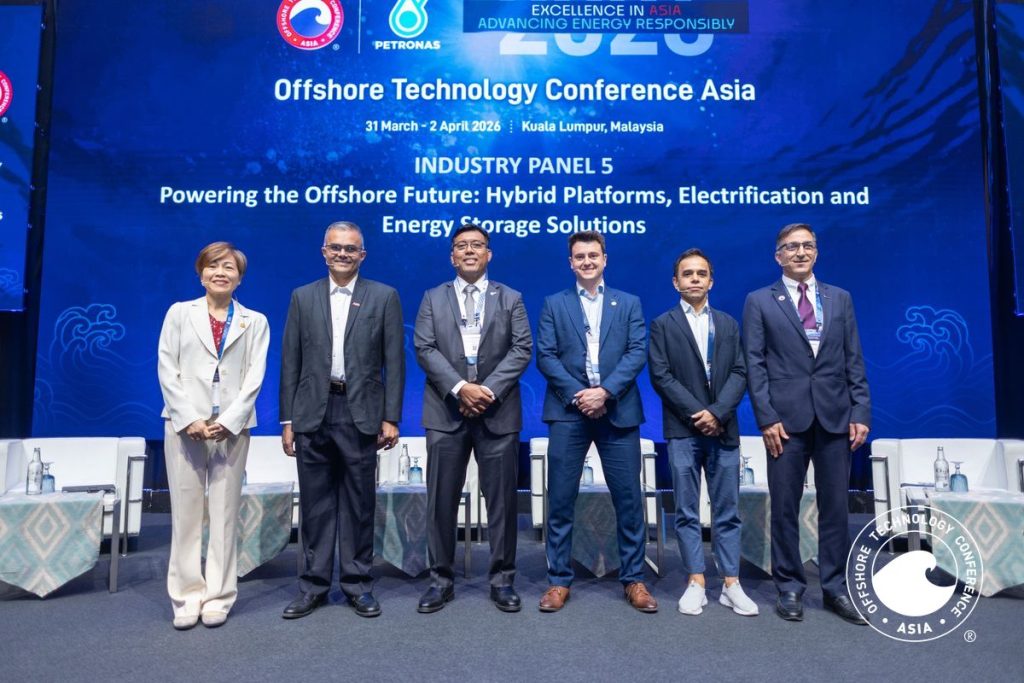
The Offshore Technology Conference Asia (OTC Asia) 2026 took place from 31 March to 2 April 2026 in Kuala Lumpur, Malaysia. This event brought together energy professionals from the Asia-Pacific region and beyond to advance offshore energy innovation and cross-border collaboration.
The event featured over 200 exhibitors showcasing technologies in offshore oil & gas, renewables, subsea systems, and digital solutions. Major participants included PETRONAS, Shell, PTTEP, TechnipFMC, Baker Hughes, Inpex, and ENEOS, alongside emerging technology startups and innovators.
The conference programme also featured region-focused sessions and “Around the World” series discussions with insights on markets such as China, Japan, India, and ASEAN offshore development, reflecting the global scope and diversity of perspectives at the forum. As the offshore sector in Asia continues to navigate the dual imperatives of energy security and decarbonisation, OTC Asia 2026 reinforced its role as a key platform for exploring how offshore assets are being redefined into integrated, multi-energy systems combining oil & gas with renewables and digital infrastructure.
A key contextual factor shaping discussions at OTC Asia 2026 was the ongoing Israel–U.S.–Iran conflict, which has significantly influenced global energy market sentiment and offshore investment risk perceptions.
The escalation has heightened concerns around the security of critical maritime routes, specifically the Strait of Hormuz, which remains a vital corridor for global oil and LNG flows. This has led to:
| ▸ | Increased volatility in energy prices |
| ▸ | Higher insurance and logistics costs for offshore operations |
| ▸ | Stronger focus on energy supply chain resilience across Asia |
Participants universally agreed that the markets and policymakers are underestimating the extent as well as the duration of the supply-shock from the Middle East conflict. Strategic implications for Asia include:
| ▸ | Short-term coal switching to maintain immediate power stability |
| ▸ | Efficiency gains in existing energy plants |
| ▸ | Increased oil and gas exploration in Southeast Asia and other geographies for domestic resilience |
| ▸ | Gradual shift by major economies towards renewable and nuclear energy |
| ▸ | Increased emphasis on regional energy networks and grids in ASEAN and beyond |
| ▸ | Greater collaboration across all industry players along the value chain for faster deployment |
In parallel, discussions at the conference highlighted the growing role of digital integration and systems optimisation, enabling more efficient management of complex offshore energy assets across their full lifecycle. Technologies and opportunities related to Carbon Capture and Storage (CCS) too were a focus from many of the exhibitors at the conference.
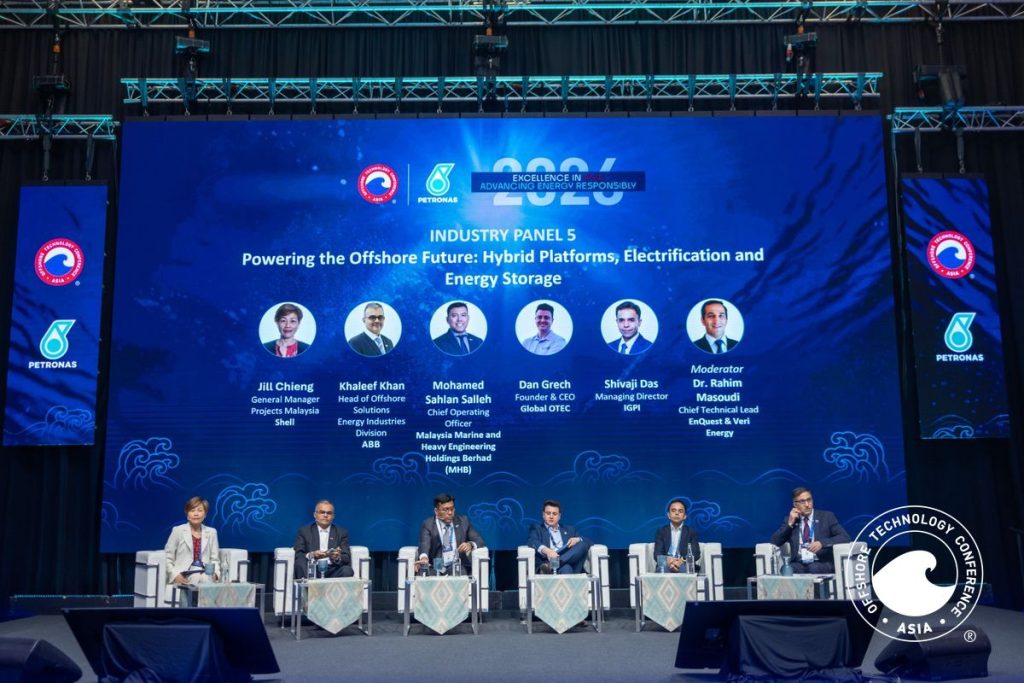
At the conference, IGPI participated in the industry panel: “Powering the Offshore Future: Hybrid Platforms, Electrification and Energy Storage Solutions.”
Shivaji Das, Managing Director at IGPI Singapore, contributed insights on the transformation of offshore energy systems into integrated and flexible energy ecosystems.
IGPI shared that offshore energy is increasingly positioned as the next integrated energy frontier, where assets are evolving beyond single-purpose infrastructure into interconnected energy platforms. These systems are expected to combine hydrocarbons, renewables, carbon capture and storage, and energy storage into unified operating architectures that optimize across multiple energy vectors.
At the same time, the transition will not be uniform across regions, with distinct regional pathways emerging globally based on resource endowment, policy direction, and market maturity. Some regions are accelerating electrification and deep grid integration, while others are prioritizing hybrid gas-to-power models, or modular floating infrastructure.
Beyond technology, market enablers such as carbon pricing, power market design, cross-border interconnections, and utility–oil & gas–investor collaboration models will be critical in determining deployment speed and scalability.
Advancements are being shaped by the dual need for integration and cost efficiency. The sector is moving toward standardized, modular, and integrated design approaches, enabling repeatability and faster deployment across projects. Multi-source energy systems, alongside CCS integration, are emerging as key architecture principles for next-generation offshore infrastructure. These are reinforced by digital capabilities such as AI-enabled optimization, digital twins, cybersecurity systems, and advanced energy management systems, improving operational efficiency and resilience.
In parallel, cost reduction is being driven through shared infrastructure (cables, platforms, pipelines, and hubs), electrification of offshore assets, subsea power grids, HVDC transmission, and cross-border grid synchronization.
Additional enablers such as portfolio-based development, optimized dispatch, carbon pricing mechanisms, and ecosystem partnerships are required to further enhance capital efficiency and accelerating deployment.
The complexity of the offshore transition is reinforcing the strategic importance of M&A and joint ventures as critical execution enablers. As projects become more integrated and capital intensive, there is a growing need for end-to-end capabilities spanning renewables, hydrocarbons, digital systems, and carbon management. Portfolio scale and standardization are becoming essential to achieving cost efficiency and repeatability, driving traditional players to expand into adjacent segments such as offshore wind and solar, LNG integration, and carbon capture infrastructure. At the same time, elevated project risks in offshore environments necessitate collaborative structures.
M&A is increasingly focused on closing capability gaps in renewables, digital, and CCS, while also building scalable asset portfolios and integrated hubs.
Meanwhile, joint ventures and partnerships are emerging as preferred models for asset-heavy developments, early-stage technologies, and region-specific projects, enabling risk-sharing, faster deployment, and broader market access across geographies.
IGPI also shared some of the best practices for M&A in this context based on its recent project experience in the offshore sector.
In summary, IGPI emphasized that future competitiveness in offshore energy depends on building integrated capability ecosystems through partnerships, alliances, and targeted consolidation strategies and supported by a strong enabling policy environment.
To find out more about how IGPI Group can provide support for businesses, browse through our insight articles or get in contact with us.

Shivaji Das, Managing Director of IGPI Singapore
Shivaji has over 20 years of strategy consulting experience, specializing in New Business Models, Innovation Roadmaps, and Sustainability Journeys. He has worked with private and public sector clients across 25 countries in sectors like Technology, Semiconductors, Chemicals, Healthcare, Renewable Energy, and Construction. Previously, Shivaji was a Partner and Managing Director-APAC at Frost & Sullivan. His paper on Artificial Intelligence was presented at CAINE-2000 in Hawaii, USA. He is the author of seven acclaimed travel, art and business books including The Visible Invisibles and Rebels, Traitors, Peacemakers (both Penguin Random House), as well as The Great Lockdown: lessons learned during the pandemic from organizations around the world (Wiley, USA).
He is an alumnus of IIT Delhi and IIM Calcutta.
IGPI Group is a Japan rooted premium management consulting & Investment Group headquartered in Tokyo with a footprint in Osaka, Singapore, Hanoi, Shanghai & Melbourne, as well as parts of Europe and India. The organization was established in 2007 by former members of the Industrial Revitalization Corporation of Japan (IRCJ), a USD 100 billion sovereign wealth fund focusing on turn-around projects in Japan. IGPI Group has 13 institutional investors, including Nomura Holdings, SMBC, KDDI, Recruit & Sumitomo Corporation to name a few. IGPI Group has vast experience in supporting Fortune 500s, Govt. agencies, Universities, SMEs and funded startups across Asia and beyond for their strategic business needs and hands-on support across a wide variety of industries. IGPI group has ~8,500 employees on a consolidated basis.
* This material is intended merely for reference purposes based on our experience and is not intended to be comprehensive and does not constitute as advice. Information contained in this material has been obtained from sources believed to be reliable, but IGPI does not represent or warrant the quality, completeness, and accuracy of such information. All rights reserved by IGPI.

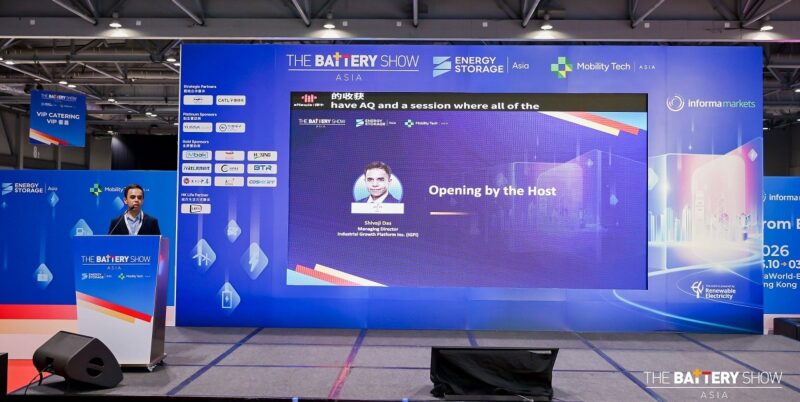
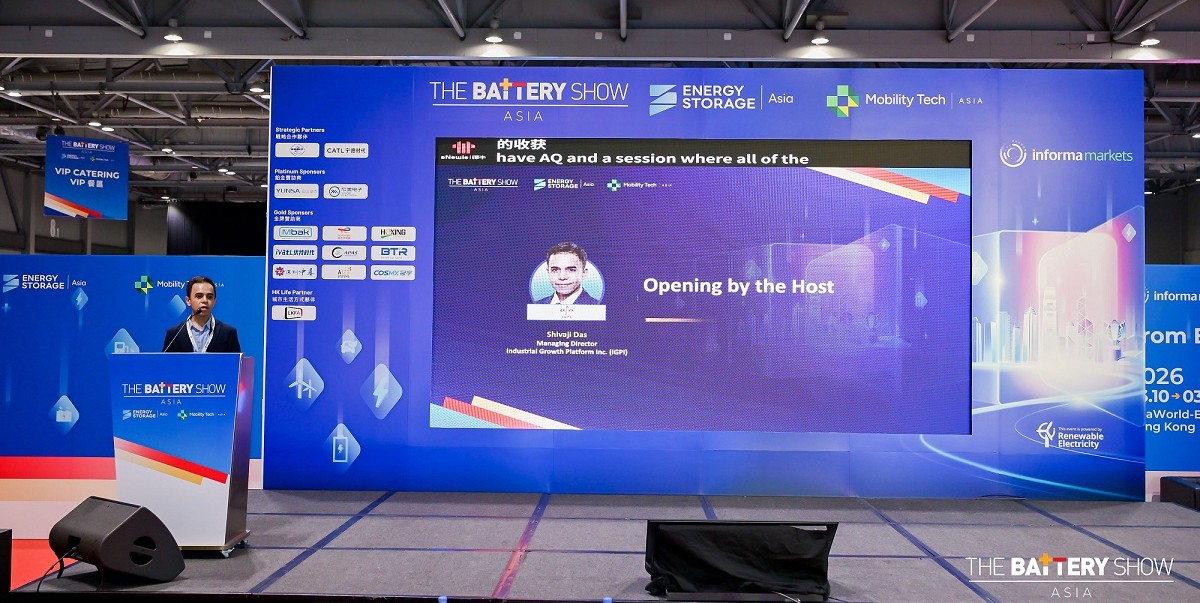
IGPI was proud to participate in The Battery Show Asia 2026, held at AsiaWorld-Expo in Hong Kong from 10–12 March 2026. Organized by Informa Markets, the event is a premier platform for the global battery, energy storage, and e-mobility ecosystem.
The event attracted over 20,000 industry participants and more than 350 exhibitors, showcasing 1,000+ technologies across the entire battery value chain—from raw materials and components to systems integration and recycling solutions.
Key highlights included:
| ▸ | Strong cross-border collaboration between Asian and Western companies, including deep-dive technical sessions on next-generation battery chemistries and manufacturing |
| ▸ | Participation from industry leaders such as Contemporary Amperex Technology Co. Limited (CATL), Wuxi Lead Intelligent Equipment, and the Nano and Advanced Materials Institute, alongside a wide range of emerging technology providers |
| ▸ | Co-located events: Energy Storage Asia and Mobility Tech Asia, enhancing deal-making across EVs and grid storage |
| ▸ | Dedicated ASEAN pavilions, showcasing regional innovation and partnerships |
The event highlighted several accelerating technology trends shaping the global battery industry.
Solid-state batteries and sodium-ion chemistries are gaining traction as alternatives to lithium-ion, particularly for cost-sensitive and stationary storage applications.
At the same time, AI-driven manufacturing, digital twins, and advanced battery management systems are improving efficiency, safety, and lifecycle performance.
Fast-charging technologies and megawatt-scale EV charging infrastructure are also advancing rapidly, supporting electrification beyond passenger vehicles into trucking, maritime, and even eVTOL (electric vertical takeoff and landing) segments.
However, the industry faces structural challenges. China’s battery overcapacity continues to pressure margins globally, driving consolidation and aggressive export strategies. Meanwhile, policy uncertainty—such as Europe’s evolving stance on internal combustion engine (ICE) phase-outs—creates mixed demand signals for automakers and suppliers. Access to critical minerals like lithium, nickel, and rare earths remains a strategic concern, pushing governments and companies to diversify sourcing and invest in recycling and circular supply chains.
Battery logistics and recycling emerged as key themes, with growing emphasis on second-life applications and closed-loop systems. New business models—such as battery-as-a-service (BaaS), leasing, and energy storage-as-a-service—are reshaping revenue streams. Finally, growth opportunities are increasingly shifting beyond China and Europe. Markets like India, Thailand, and Malaysia are attracting investment due to favorable policies, rising EV adoption, and their role as alternative manufacturing hubs in a diversifying global supply chain.
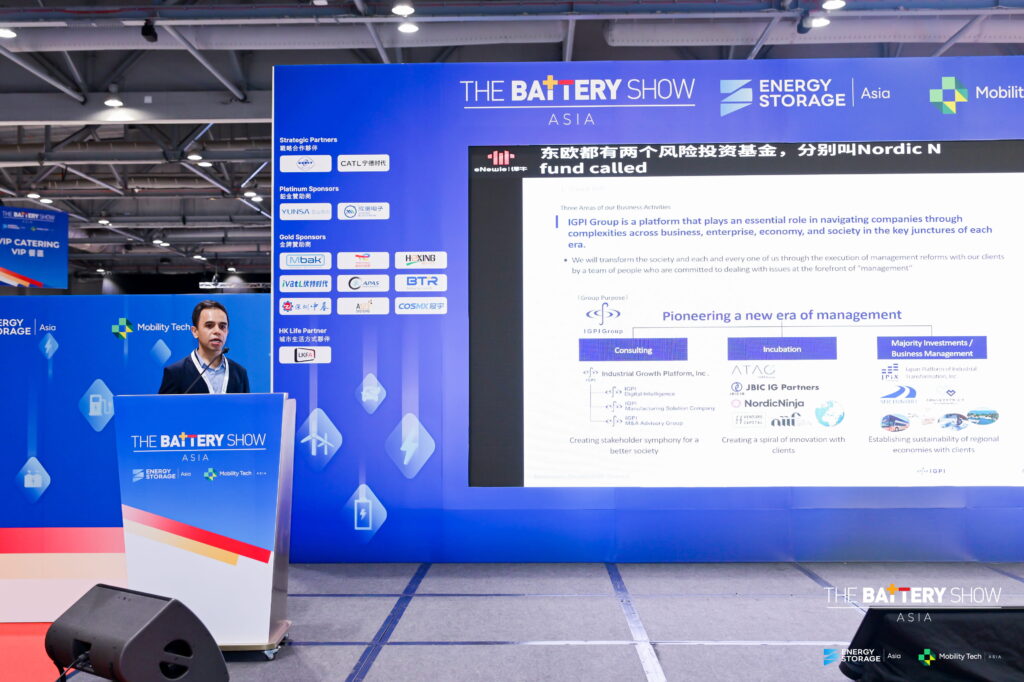
IGPI actively participated in the conference with a dedicated booth, engaging industry stakeholders on strategy consulting and investments in areas such as EV manufacturing, battery storage and battery technology.
Shivaji Das, Managing Director of IGPI Singapore, also served as Chairperson for the track: Market and Investment Forums: Battery and E-Mobility Investment Forum.
The session focused on commercialization pathways for AI in the battery industry and their relative Technology Readiness Level (TRL).
Highlighted use cases included:
| ▸ | AI-driven testing to accelerate R&D for new battery materials |
| ▸ | Digital twins for optimizing manufacturing and quality assurance |
| ▸ | AI-enabled recycling systems to improve material recovery and ecosystem visibility |
The session also identifies the challenges involved in scaling these use cases, including integration complexity and ROI realization. IGPI shared how its recent work have helped clients create business models and partnerships to overcome these challenges, helping organizations transition from pilot projects to profitable deployment while improving ROI.

To find out more about how IGPI Group can provide support for businesses, browse through our insight articles or get in contact with us.
Shivaji Das, Managing Director of IGPI Singapore
Shivaji has over 20 years of strategy consulting experience, specializing in New Business Models, Innovation Roadmaps, and Sustainability Journeys. He has worked with private and public sector clients across 25 countries in sectors like Technology, Semiconductors, Chemicals, Healthcare, Renewable Energy, and Construction. Previously, Shivaji was a Partner and Managing Director-APAC at Frost & Sullivan. His paper on Artificial Intelligence was presented at CAINE-2000 in Hawaii, USA. He is the author of seven acclaimed travel, art and business books including The Visible Invisibles and Rebels, Traitors, Peacemakers (both Penguin Random House), as well as The Great Lockdown: lessons learned during the pandemic from organizations around the world (Wiley, USA).
He is an alumnus of IIT Delhi and IIM Calcutta.
IGPI Group is a Japan rooted premium management consulting & Investment Group headquartered in Tokyo with a footprint in Osaka, Singapore, Hanoi, Shanghai & Melbourne, as well as parts of Europe and India. The organization was established in 2007 by former members of the Industrial Revitalization Corporation of Japan (IRCJ), a USD 100 billion sovereign wealth fund focusing on turn-around projects in Japan. IGPI Group has 13 institutional investors, including Nomura Holdings, SMBC, KDDI, Recruit & Sumitomo Corporation to name a few. IGPI Group has vast experience in supporting Fortune 500s, Govt. agencies, Universities, SMEs and funded startups across Asia and beyond for their strategic business needs and hands-on support across a wide variety of industries. IGPI group has ~8,500 employees on a consolidated basis.
* This material is intended merely for reference purposes based on our experience and is not intended to be comprehensive and does not constitute as advice. Information contained in this material has been obtained from sources believed to be reliable, but IGPI does not represent or warrant the quality, completeness, and accuracy of such information. All rights reserved by IGPI.
This challenge is not unique to any one industry. Whether in energy, manufacturing, logistics, financial services or digital infrastructure, leaders face the same underlying question: How do we move from scattered experimentation to AI that actually solves real problems?
The next phase of AI adoption will depend not on building more pilots, but on building better ones – guided by clear value, robust data, organizational readiness, and strong governance. And across industries, several emerging patterns show what it takes to make AI work at scale.
The corporate world is full of PoCs that demonstrate technical feasibility but fail to create strategic value. In most cases, the issue is not the model – it is everything around it.
Many AI pilots begin with excitement about algorithms or tools, rather than a specific business problem. Technical teams build models without integrating them into real workflow, and business teams evaluate outputs without understanding how the system would operate at scale. Data is often incomplete, siloed, or difficult to access. Processes are not designed for AI intervention. Governance remains unclear.
The outcome is predictable: impressive dashboards, promising prototypes, but no path to actual deployment.
As one global consulting study shows, less than 15% of AI pilots ever reach production[1]. The majority fail not because they are “bad technology,” but because they lack an operational, data and organizational foundation for scale.
Solving this requires shifting from novelty-driven experimentation to application-driven AI – AI focused on specific, well-understood challenges that carry operational, financial, or strategic significance.
Few sectors illustrate this better than the energy industry, where use cases have matured rapidly but inconsistently.
In traditional power generation and field operations, AI is increasingly used to optimize maintenance, detect anomalies and reduce downtime. For example, Shell has deployed AI-based predictive maintenance across more than 10,000 pieces of equipment, significantly reducing unplanned outages[2]. These applications work because they are tied to clear operational KPIs and deep domain expertise.
In renewables, AI is accelerating forecasting of wind and solar output – critical for grid stability. Google uses AI at its wind farms to predict output 36 hours ahead, improving the value of renewable power sold to the grid[3].
Meanwhile, in energy infrastructure – such as the operations of LNG terminals, pipelines, and power plants – AI is being tested for intelligent routing, leakage detection, and real-time optimization. These applications remain early, but the direction is clear: AI is becoming a performance lever in complex, asset-intensive environments where data is abundant and every percentage-point improvement matters.
However, even in leading companies, scaling remains difficult. The core challenge is integration: AI must fit into existing SCADA systems, safety protocols, regulatory controls, and engineering workflows. Technical feasibility does not guarantee operational readiness.
In manufacturing environments, AI adoption has advanced significantly in quality inspection, robotics, supply chain planning and workforce productivity.
For instance, Toyota uses AI-driven visual inspection to reduce defects in critical components[4]. Siemens has implemented AI to automate process optimization in chemical plants, increasing yield and reducing energy consumption[5]. In semiconductor fabrication, AI helps detect nanometer-level defects that are invisible to human inspectors.
Yet the next opportunity is not only automation – it is cognitive assistance. Engineers increasingly rely on AI to search complex knowledge bases, recommend solutions and inform design decisions. Several Japanese manufacturers are experimenting with “AI copilots for engineers” to consolidate decades of tacit knowledge.
These applications show promise, but they succeed when AI is embedded into human workflows – not when it replaces them. Factories are human-machine systems, and AI must augment, not disrupt, the operators at the center.
In finance, AI is widely used in fraud detection, credit scoring, customer insights and operational automation. But the sector also reveals one of the most difficult AI challenges: explainability and compliance.
Banks frequently build AI models for risk management or lending decisions, but struggle to deploy them because they cannot be easily explained or audited. As a result, many institutions rely on AI for preliminary analysis but keep final decisions under strict human supervision.
On the operational side, some financial firms have achieved remarkable gains. JPMorgan’s COiN platform reviews commercial loan agreements using AI, reducing 360,000 hours of manual review annually[6]. Meanwhile, OCBC in Singapore uses AI to improve fraud detection and reduce false positives by over 40%[7].
The lesson is clear: in financial services, AI works at scale when governance and auditability are built in from the start. Technology alone cannot overcome regulatory constraints; AI must align with compliance, not compete with it.
Data centers, telecom firms and cloud providers are under immense pressure as AI workloads surge. The challenge is not only capacity but efficiency.
AI is being deployed to improve cooling efficiency, reduce power consumption and predict equipment failures. Google achieved a 40% reduction in cooling energy at its data centers using DeepMind’s AI system[8]. Japanese telcos use AI to optimize network routing during peak traffic loads.
However, scaling these solutions is difficult because infrastructure varies widely across sites and regions. AI must adapt to diverse operational conditions – making local data quality and system integration central bottlenecks.
Across industries, the patterns are remarkably consistent. AI applications that scale typically share four characteristics:
1. | They solve real problems, not abstract use cases. They address operational bottlenecks, financial pain points, safety risks or environmental requirements. |
2. | They are built on strong data foundations: Clean, reliable, integrated data remains the biggest barrier to scale. |
3. | They integrate into existing processes: AI that requires new workflows often fails; AI that enhances existing ones succeeds. |
4. | They include governance from day one: Companies that scale AI have clear rules for oversight, risk, and responsibility. |
These factors matter more than which model or algorithm is used.
The next era of AI adoption will be defined not by how many pilots companies run, but by how many they scale. For leaders across ASEAN and Japan, the challenge is to shift from technology exploration to problem-driven application, backed by organizational readiness.
This requires clarity on where AI can deliver immediate value, commitment to building the right data foundations, and an operating model that blends human judgment with machine intelligence. It also demands realistic expectations – AI cannot fix broken processes or poor data on its own.
Companies that navigate this transition thoughtfully will unlock not only efficiency but strategic advantage. Those that remain trapped in perpetual experimentation risk falling behind in a world where AI will increasingly differentiate winners from laggards.
The promise of AI is real, but real value comes not from algorithms – it comes from applications that solve real problems at scale.
To find out more about how IGPI Group can provide support for businesses, browse through our insight articles or get in contact with us.
References
[1] https://fortune.com/2025/08/21/an-mit-report-that-95-of-ai-pilots-fail-spooked-investors-but-the-reason-why-those-pilots-failed-is-what-should-make-the-c-suite-anxious/
[2] https://c3.ai/shell-achieves-major-milestone-scales-artificial-intelligence-predictive-maintenance-to-10000-pieces-of-equipment-using-c3-ai/
[3] https://deepmind.google/blog/machine-learning-can-boost-the-value-of-wind-energy/
[4] https://pressroom.toyota.com/toyota-and-generative-ai-its-here-and-this-is-how-were-using-it/
[5] https://innovateenergynow.com/resources/siemens-and-the-rise-of-industrial-ai-in-process-automation
[6] https://www.emreates.co.uk/research-2/jpmorgan’s-coin-(contract-intelligence)-platform%3A-using-ai-in-mergers-%26-acquisitions-and-commercial-lending
[7] https://www.ocbc.com/group/investors/annual-reports/2024-annual-report/creating-value-through-ai.page
[8] https://deepmind.google/blog/deepmind-ai-reduces-google-data-centre-cooling-bill-by-40/

Harsh Munim, Associate of IGPI Singapore
Harsh is a dynamic professional with an MBA from NUS Business School and a BBA in Finance from City University of Hong Kong, where he also had the opportunity to go on an exchange program to Indiana University Bloomington in the United States. With over 4 years of experience, Harsh brings a wealth of expertise to his role at IGPI. Prior to joining IGPI, he worked as a Senior Project Manager at an investment research firm in Hong Kong, where he managed diverse projects in Southeast Asia and Oceania. During his MBA, Harsh interned with IGPI, contributing to projects related to carbon credits, microgrids, and the consumer goods industry. He also gained valuable experience at IQVIA, where he supported global pharmaceutical companies on LOE strategy, segmentation, targeting, and go-to-market projects.
IGPI Group is a top management consulting & investment platform headquartered in Tokyo with a global footprint covering Singapore, Australia, Vietnam, Indonesia, China, Europe and India. The organization was established in 2007 by former members of the Industrial Revitalization Corporation of Japan (IRCJ), a USD 100 billion sovereign wealth fund focusing on turn-around projects in Japan. The group has 12 institutional investors, including Nomura Holdings, SMBC, KDDI, Recruit Holdings and Sumitomo Corporation. The group has three core businesses – management consulting, incubation & funding and major investments & business management. IGPI Group has approximately 8,500 employees on a consolidated basis.
IGPI Singapore was established in 2013 to provide end-to-end support, from strategy development to hands-on support, with capability of conducting M&A advisory as well as making principal investments. Leveraging long-standing relationships and trusted networks, IGPI Singapore is strongly connected with regional conglomerates across ASEAN, Japanese companies and major multinational corporations. Through these connections, the team has advanced initiatives and ventures with conglomerate partners, including smart city initiatives in Vietnam and Indonesia, among others, helping clients enter, grow, and transform across Southeast Asia.
* This material is intended merely for reference purposes based on our experience and is not intended to be comprehensive and does not constitute as advice. Information contained in this material has been obtained from sources believed to be reliable, but IGPI does not represent or warrant the quality, completeness, and accuracy of such information. All rights reserved by IGPI.

Meanwhile, the rapid diffusion of AI is reshaping the foundations of productivity on the economic front, even as it forces a reconsideration of regulation, accountability, and governance in the social sphere.
Yet these developments should not be understood as isolated or episodic phenomena. Rather, they appear to be the structural risks during a transitional period in which the very lens through which the world is viewed is being reorganised. They reflect a confluence of international politics, economics, technology, and institutional change. For corporate management, the critical tasks lie in calmly assessing the interactions among these forces, clarifying the likelihood and impact of these global risks, defining ex-ante and ex-post responses, and integrating them coherently into business strategy.
This article highlights nine major risks that ASEAN companies are likely to face in 2026 and discusses the managerial perspectives required to understand and address them in structural terms.
[Global Risks for ASEAN Companies in 2026]
1. Protracted US–China Rivalry and Decoupling
2. The Rising Presence of Emerging Powers
3. Regional Instability in ASEAN
4. Knock-on Effects of Major Global Conflicts on ASEAN
5. AI-Driven Disinformation in the US Midterm Elections
6. Uncertainty Regarding China’s Economic Outlook
7. Measuring the Value-Added Productivity of AI
8. Drift and Fragmentation in Climate Action
9. Intensifying Regulation of Big Tech
US-China rivalry is no longer a transient source of tension; it is becoming embedded as a structural and secular risk to the global economy. The advent of the post-globalisation era is overturning long-standing assumptions about international division of labour premised on efficiency, while deepening the formation of economic blocs anchored in national security. Critical and foundational technologies such as AI, quantum computing, and advanced semiconductors are now viewed as the core of national competitiveness, prompting both Washington D.C. and Beijing to deploy a full arsenal of export controls, investment screening and industrial subsidies to secure technological advantage. In practice, many global corporations are already building self-contained value chains both within and outside China. Yet the existing interdependence — across both hardware and software — remains substantial, and maintaining these parallel structures entails significant costs.
As a result, global companies face new cost and risk factors defined by regulations that actively induce decoupling. Manufacturing and R&D footprints, data flows and even financial transactions must be aligned with regulatory regimes on both sides, in some cases forcing a fundamental redesign of business models.
Supply chains are increasingly bifurcating into a “US bloc” and a “China bloc,” intensifying pressure on so-called “middle countries” — often in the Global South — to choose sides. Governments are compelled to strike difficult diplomatic balances between economic interests and security imperatives, rendering the international order ever more fluid. At the same time, multilateral institutions such as the World Trade Organization, which once played a stabilising role in shaping and sustaining free trade are their ability to influence and regulate, replaced by competing regulatory initiatives led by individual economic blocs. Capital flows are also polarising, with the reassertion of dollar hegemony alongside the gradual emergence of a digital renminbi adding further complexity.
For ASEAN, this decoupling dynamic creates both opportunities (demand) and constraints. As global firms build value chains outside China, export driven manufacturers in ASEAN are possible beneficiaries of more relocation demand, with the caveat that projects are designed around dual compliance, potentially requiring splitting of manufacturing and R&D footprints by distinct US-linked and China-linked customers and technology stacks. At the same time, ASEAN is likely to face more pressure to pick sides on standards and policies as supply chains divide into US- and China-blocs, while also having to keep an eye on the middle countries that will gain bargaining power as a result of the split. Capital decisions will also become more sensitive to currency and payment rails, with dollar-based finance likely to remain dominant in the face of a growing uptake of a digital renminbi.
India, Indonesia, Brazil, Turkey and Mexico are rapidly gaining prominence as the next growth pillars of the global economy. As US-China decoupling advances, some of these countries have become key beneficiaries of “China plus one” strategies, fostering manufacturing clusters. India seeks expansion in semiconductors and smartphone assembly; Indonesia is building an integrated EV battery ecosystem anchored in nickel resources; Mexico’s geopolitical position and the USMCA are accelerating nearshoring and deepening integration with North American supply chains. Brazil’s dominance as a resource supplier to both blocs continues.
Expanding domestic markets provide a second growth pillar. In all these emerging economies, rising middle classes, urbanisation, and digital payment infrastructure support consumption-led growth models, lending to greater resilience against external shocks. Nonetheless, policy predictability and transparency remain key concerns, and regulatory change risk continues to shape investment decisions.
These countries are also emerging as non-aligned middle states that maintain security interests and investment ties with the United States while preserving trade and infrastructure cooperation with China or Russia. As the power rivalry intensifies, their bargaining power is likely to rise and reshape regional and global world orders, reflecting the multi-polarisation of the global economy and significantly influencing post globalisation supply chain configurations.
For ASEAN, the rise of non-aligned middle states has profound implications. While emerging markets such as India, Brazil, etc. offer dynamic, exciting growth opportunities, their rising bargaining power might force ASEAN companies to localize operations significantly in these centres, thereby demanding a relook into future investment plans, organization structures and local partnerships. ASEAN companies can also leverage these locations to strengthen their global bases for research, manufacturing and services (e.g. Turkey as a regional manufacturing hub, India as global shared services centre). Since many of such emerging markets have a strong protectionist slant, ASEAN companies may need to increasingly work with policymakers to avoid unfavourable tariff or investment restrictions.
Instability in ASEAN is driven by domestic political conflict, street mobilisation and cross border security frictions. In Myanmar, the civil war that followed the 2021 coup has led to controversial election proceedings that may cement the military-backed Union Solidarity and Development Party as next leaders. In Indonesia and the Philippines, large youth-led protests have taken place in multiple cities over economic and socio-political concerns underpinned by deeply entrenched corruption. In Thailand, upcoming elections are unlikely to lead to short-term political stability or a stable administration, with the path to forming a coalition government unclear, against a backdrop of border conflicts with Cambodia. The South China Sea remains a persistent flashpoint, especially between the Philippines and China.
For companies in ASEAN, such instability demands a review of short- and mid-term business plans, project pipelines, new ventures and supply chains to reassess assumptions, implications and exposure to geopolitical risks on a country-by-country basis. This lends to adverse impact on timelines, supply stability and regulatory certainty – financing and contracting will also see high risk premiums priced in and longer decision tenures. However, in the context of regional volatility, ASEAN conglomerates stand to gain, with opportunities to play a major role in stabilising the domestic economy and improving society through leveraging traditional close ties with local administrations, multi-business synergies and strong financial standing to attract capital.
Outside ASEAN, the main conflicts shaping global risks are the Russia Ukraine war, the Middle East conflict, North-Asia tensions and other active and potential conflicts in places such as Sudan, Venezuela or Congo. These tensions persist because core political disputes remain unresolved, and in some cases conflict spills into trade routes and sanctions, spreading the impact beyond the battlefield.
Energy and shipping markets are likely to remain reactionary to headlines – the Red Sea remains a key uncertainty as route diversions and attack risk persist and Taiwan Strait tensions ebb and flow as drills intensify, or incidents occur near major ports and sea lanes. Persistent perception of high inflation and its perceived linkages to Russia-Ukraine and other cross-border conflicts hold the potency of disrupting domestic politics in far-flung markets.
For ASEAN companies, the impact shows up in the form of higher and more volatile costs and demand uncertainty. Disruptions to shipping and insurance have a knock-on effect on logistics and operating costs, which are passed through into prices of affected goods and services. Risks arising from the Taiwan Strait will impact firms exposed to Northeast Asia trade and regional production networks, where tensions may disrupt shipping routes and high value intermediate flows across multiple sectors. On the other hand, such an environment also creates opportunities for ASEAN countries to attract capital inflows if correctly positioned as stable and neutral hubs. Some countries such as Singapore are structurally better placed to capture diversion flows and assume regional coordination roles, with said opportunities available to the other ASEAN nations contingent on the near and mid-term outcomes of internal instability and domestic political shifts.
The 2026 US midterm elections are likely to mark a critical inflection point in what might be termed as the “AI information warfare,” testing the resilience of democratic systems. Advances in generative AI have automated propaganda activities that once required substantial human and financial resources, enabling the mass production and dissemination of disinformation at minimal cost. Highly realistic synthetic audio and video, along with continuously generated, micro-targeted false narratives, have begun to erode the infrastructure of electoral communication.
In the United States, where regulations governing political advertising, transparency obligations, and social media usage vary widely by state, a unified federal response remains difficult. This patchwork regulatory landscape risks creating loopholes readily exploited by malicious actors. As trust in traditional media continues to erode, voters face increasing cognitive burdens in discerning truth from falsehood, and the public deliberative space at the heart of democracy is showing signs of institutional fatigue.
Foreign actors — including China, Russia, and Iran — are further refining AI-enabled techniques to amplify social cleavages within the United States. Polarisation obscures detection of foreign interference and magnifies the impact of information manipulation. Domestically, legislative and judicial progress on AI regulation remains slow, leaving platform companies caught between strengthening self-regulation and safeguarding freedom of expression. Any erosion of trust in electoral legitimacy would reverberate through policy implementation and international leadership. The 2026 midterms thus risk exposing deep structural vulnerabilities of democracy in the AI era, casting a long shadow over the stability of US politics.
For ASEAN, policy volatility from the US is likely to persist regardless of election outcomes – prevailing policy narratives in the US are unlikely to reverse, which includes a stronger protectionist and nationalist stance, continued decoupling and polarization and policy signalling shaped by domestic voter pressures. While rhetoric and intensity may shift, the underlying direction is unlikely to reverse in the near term. Ultimately, ASEAN largely remains a policy taker and ASEAN companies therefore need to closely watch the US election outcome for signals on pace and emphasis of this direction which will impact the region through multiple channels, including tariffs, shifting trade and investment restrictions, immigration policy, reshoring of production, and scrutiny of the region as a potential transshipment and compliance risk. While the exact mix remains uncertain, spillovers into trade, supply chains, and investment planning are likely to persist.
China’s economic outlook remains uncertain, driven by policy ambiguity and weak confidence, with the property downturn amplifying debt risks for Local Government financing vehicles (LGFVs) and potential financial spillovers. As land-sale revenues collapse and local fiscal foundations weaken, many local governments have accumulated debt to sustain infrastructure investment and employment. With the contraction of the property market and the deterioration of collateral values, LGFVs’ repayment capacity is increasingly in question. The spillover into the financial sector risks triggering a classic credit-deflation dynamic, embedding downward pressure on growth.
Beijing has so far refrained from offering a clear local-government bailout scenario, seeking to curb moral hazard rooted in expectations of central rescue. The resulting policy uncertainty has further reinforced caution among economic actors. Stagnant property prices — critical given the dominance of real estate in household asset portfolios — are suppressing consumption. While service consumption is relatively resilient, demand for durable goods is softening. Combined with excess production capacity, this raises the risk of deepening deflationary pressures, reinforcing uncertainty over China’s medium term growth path.
Rising youth unemployment constitutes another structural risk. Restructuring of the education sector, and subdued private sector investments have constrained job creation. Moreover, demand for while-collar labour has proven insufficient to absorb the large inflow of new graduates. As a result, social frustration is becoming more pronounced. The government faces a difficult dilemma between maintaining social stability and sustaining growth. While industrial policy is shifting from a manufacturing powerhouse toward technological hegemony — focusing resources on semiconductors, EVs, and AI — heightened external restrictions leave the growth trajectory of these sectors uncertain. Overall, China risks slipping into a prolonged low-growth trap, exerting persistent downward pressure on the global economy.
For ASEAN, a weaker China can translate into more Chinese firms pushing outward. As China’s domestic demand softens and overcapacity persists, Chinese companies are more likely to expand into ASEAN through exports or localised partial investment to find growth and absorb domestic capacity potentially via dumping. This raises competitive pressure on ASEAN firms through cheaper imports, faster capacity additions and margin compression particularly in China-dominated sectors, such as industrial materials and intermediate goods, machinery and electronics, consumer durables, clean tech value chains such as solar, batteries and EV related components, as well as consumer goods and F&B products. The broader shock then could propagate through ASEAN economies through weaker prices, inventory build ups, delayed investment and knock-on effects on the broad SME sector if left unprotected.
Discourse on the AI bubble references the growing gap between very high expectations and spending and the slower pace of proven returns and is a theme increasingly covered in global commentary. Trillions of dollars are being committed to chips, data centres and power, while many companies still struggle to move from pilots to scaled impact and clear ROI. This gap is amplified by financing and accounting choices that keep some AI data centre debt off balance sheets, masking leverage as the buildout accelerates. In ASEAN, this dynamic is visible in Singapore’s heavy cloud and AI infrastructure investment, Malaysia and Thailand’s rapid data centre expansion tied to foreign hyperscalers and Indonesia’s push to attract AI related capex despite ongoing questions around power, skills, and utilisation rates.
In the near future, analysts widely expect a separation between winners that demonstrate measurable outcomes and players that cannot, rather than a sudden collapse. Some reports frame 2026 as a transition point where inflated narratives give way to economic measurement, with governments beginning to treat AI capital as a standard input into productivity and GDP analysis. In Singapore, early gains are visible in finance and professional services, where AI improves decision speed and output quality. In contrast, opinion pieces note that countries like Indonesia and Vietnam may see slower payoff as adoption is constrained by skills, data readiness, and firm size, even as infrastructure investment races ahead. Across the region, debate is shifting toward whether returns can catch up with capex and whether regulation on liability, bias, and transparency tightens, particularly in regulated sectors such as finance and healthcare.
Both opportunities and pressures exist for ASEAN companies. If the current AI euphoria proves closer to speculative fervour than a durable productivity revolution, hyperscalers may slow data centre and infrastructure commitments in markets such as Malaysia and Thailand. At the same time, tools that translate into tangible productivity gains should continue to diffuse into most if not all industries including finance, logistics, manufacturing planning and customer operations, albeit with firms will focus solely on trackable and measurable gains tied to AI adoption.
Two key constraints of AI expansion are energy and capital. Data centres are scaling toward gigawatt level power demand and utilities face uncertainty in committing to long term supply; rapid chip advances also raise the risk of asset obsolescence before returns are realised. In a correction scenario, spillovers can extend beyond a few large tech firms into the broader ecosystem that finances and supplies AI buildout.
In practical terms, ASEAN firms are equally pressured to stay at the adoption frontier as competitors embed AI into core workflows, with firms in Indonesia, Thailand, or Vietnam facing additional risks of not progressing meaningfully beyond pilots and proof-of-concepts. Firms should separate promise from hype by prioritising simple high-ROI use cases, building internal localised data and AI capabilities, avoiding large upfront bets tied to uncertain demand and strengthening governance on data, compliance, and model risk as customer and regulatory expectations rise.
Triggered in part by the Trump administration’s scepticism toward climate action, climate policy has entered a phase characterized by simultaneous acceleration and drift. Competition over renewable energy subsidies may expand clean technology adoption yet also fuel friction through the misuse of industrial policy. Security driven domestic manufacturing incentives distort international division of labour and deepen market fragmentation. Retaliatory subsidy dynamics among the US, Europe, and China risk undermining coherent decarbonization efforts.
Carbon border adjustment mechanisms (CBAMs) pursued by the EU and the United Kingdom have drawn criticism over extraterritorial discrimination and excessive reporting burdens, prompting some countries to explore their own versions. Without international alignment on emissions coefficients, coverage, and transition periods, such measures risk devolving into thinly veiled protectionism.
More troubling is the climate finance gap in developing countries. While adaptation and mitigation needs continue to grow, financial support from advanced economies and private capital remains limited. Frequent climate disasters and fiscal constraints hinder resilience building, entrenching inequality and geopolitical vulnerability in emerging economies.
Although national climate targets are politically ambitious, implementation capacity often lags. Bottlenecks in renewable deployment, grid expansion, and local consent fuel policy fatigue and widen the gap between goals and reality. Decarbonisation without coherent international execution risks eroding competitiveness and employment, even as inconsistent policy accelerates climate deterioration itself.
For ASEAN, this means climate policy is becoming closely linked to trade competitiveness. Export-oriented manufacturers face rising compliance and reporting demands as policies targeting imported Scope 3 emissions expand similar to the adoption of CBAM in Europe. Competitiveness will increasingly depend on the ability to minimise emissions down to the plant/factory level, track inputs autonomously and capture and disclose emissions data for different verification requirements reliably and accurately. Countries and firms that build strong systems for measurement and disclosure will face fewer trade barriers than those that treat reporting as a one-time exercise.
ASEAN is also positioned between competing subsidy policies and security-driven industrial strategies. While the region may benefit from supply-chain relocation and green investment, it also risks being viewed as a channel for emissions leakage or trade circumvention unless rules of origin, product tracking and auditing standards meet the mandatory standards of major export markets, mainly driven by EU regulations. The main challenge is to attract investment while preserving market access which requires clear country-level taxonomies, effective enforcement guidelines and expedited policy development to support clean infrastructure requirements.
Bridging the climate finance gap is especially important for ASEAN’s transition and resilience. Limited access to concessional finance and tight public budgets makes it difficult to fund new technologies, grid enhancements and the early retirement of high-emissions assets. In the near term, ASEAN should focus on firming up key regulations and policies to support investable project pipeline development, facilitate inflow of private capital via blended finance initiatives and improving grid readiness and permitting so that climate targets translate into real capacity.
Technology industries now exert unprecedented influence over national policy, placing Big Tech at the centre of regulatory pressure. In semiconductors, the United States is integrating export controls, outbound investment restrictions, and subsidies into a comprehensive industrial security strategy, while similar concerns around strategic dependence and technological sovereignty are beginning to shape policy thinking in parts of ASEAN. As AI training and inference drive explosive demand for compute, advanced chips have become strategic assets for both states and firms.
At the same time, rapid data centre expansion is straining power grids, renewable energy plans, land, and water resources. Hyperscalers are increasingly shaping national energy and infrastructure strategies, acting as quasi state actors. This dynamic is no longer confined to the US and Europe: in 2025, ASEAN governments including Singapore, Malaysia, Indonesia, and Thailand have begun tightening oversight of data centre investment, grid access, online safety, and platform responsibilities, reflecting rising political sensitivity around power shortages, grid delays, and digital dependence. These pressures raise the likelihood of more regulation, localisation requirements, and targeted taxation of large-scale digital infrastructure.
Antitrust and platform-conduct scrutiny is also intensifying. In the US, advertising dominance and app store practices remain contested, while the EU’s Digital Markets Act has moved into enforcement. In ASEAN, 2025 has marked a shift from rulemaking to enforcement, with Indonesia fining Google over app store practices and imposing conditions on major platform acquisitions, Singapore expanding online safety powers over platforms, and Thailand and Vietnam advancing platform and data obligations. As a result, M&A is becoming a less reliable growth strategy for Big Tech, forcing firms to rethink how they acquire innovation and expand ecosystems in more regulated environments.
In ASEAN, such technologies are shifting from being treated as a growth engine to being treated as critical infrastructure, so regulation is shifting from guidance to enforcement. In 2025, Indonesia’s competition authority KPPU fined Google for Google Play billing practices and ordered Google to stop making Google Play Billing mandatory, signalling tougher platform-conduct enforcement. Singapore also moved to expand platform accountability for online harms through the Online Safety (Relief and Accountability) Bill, which creates an Online Safety Commission with powers to require action against harmful content and strengthen victim relief. Thailand issued new marketplace obligations under its digital platform services framework, with requirements published in July 2025 and taking effect from 31 Dec 2025, raising compliance expectations for platforms operating as online marketplaces. Vietnam passed a new Personal Data Protection Law in June 2025 that will take effect in 2026, signalling a tighter privacy regime that will raise compliance demands for cross border platforms and data heavy services.
Governments are also tying digital oversight to economic priorities, using Big Tech’s growing penetration as leverage to demand local investment, local partnerships, job creation, and capacity building and in some cases, local data handling and content related obligations. Compliance is no longer simply about risk management, but also increasingly part of the market access bargain, shaping where platforms can scale and how fast they can expand across the region. ASEAN companies stand to benefit via capital partnerships and joint ventures with global players, via provision of market access, firsthand data and local and regional operating capabilities.
A review of the risks confronting corporates in 2026 reveals striking similarities to the ten major risks which IGPI identified for 2025. This continuity suggests that decoupling, the erosion of multilateralism, challenges to the status quo by force, rising energy costs, the ascent of the Global South, and technology driven disruption are not transient shocks but medium-term structural risks inherent in an ongoing reordering of the global order. Viewed this way, proactive risk management is feasible, but only with a different managerial lens.
This includes viewing geopolitical risk not as an external backdrop but as a determinant of supply chains, technology, and financial strategy; moving beyond binary alignment with the US or China toward dynamic portfolio and footprint optimisation under persistent fragmentation; identifying competitive advantage arising from advanced technologies and regulatory reconfiguration; and treating supply chain redundancy and diversification not as costs but as sources of resilience based competitiveness.
What is required is not reactive crisis management or isolated preventive measures, but a redesign of management priorities and business portfolios premised on structural uncertainty. To anticipate and manage these risks effectively, five actions stand out for ASEAN companies.
1. | First, align major investments with long term megatrends rather than short cycle demand signals. Capital allocation should reflect structural drivers such as connectivity, profitable sustainability, demographic shifts and digitalisation, while reassessing legacy assets against rising geopolitical and regulatory risk. |
2. | Second, regionalise and localise operations to build operational agility. This includes strengthening decision-making in key revenue markets and source economies, redesigning supply chains with built in response scenarios and actively hedging major risk drivers rather than assuming stability. |
3. | Third, enhance internal market intelligence and scenario capabilities. This requires building internal capacity to run dynamic scenarios and impact models based on rapidly-changing geopolitical shifts, news feeds and policy intelligence to anticipate trends, derive implications and visualise impact on local and regional operations. |
4. | Fourth, proactively perform value creation & enhancement for existing and newly-acquired businesses. This entails granular and accurate performance tracking, regular review and recalibration of KPIs to reflect evolving market conditions and undertaking of value-accretive initiatives including deploying new technologies, enhancing local capabilities and leveraging organic and inorganic growth levers. |
Geopolitical uncertainty is not a passing trend—it is the new reality. Companies that continue to view it as an external risk rather than an integral part of strategy will find themselves constantly reacting rather than leading.
The businesses that succeed in this environment will be those that recognize:
– The era of globalization is over, and regionalization is the future.
– Geopolitical risks are not just threats—they are opportunities for those who anticipate them.
– Intelligence is only valuable if it is structured to drive long-term strategy, not just immediate reactions.
At IGPI, we specialize in helping businesses decode geopolitical complexity and turn risks into competitive advantages. In an era where uncertainty is the only constant, the ability to think ahead will define the winners of tomorrow.
To find out more about how IGPI Group can provide support for businesses, browse through our insight articles or get in contact with us.

Kohki Sakata, Partner of IGPI Group & CEO of IGPI Singapore
After joining Cap Gemini and Coca Cola, Kohki joined Revamp Corporation where he managed projects on global expansion and turnaround in various sectors including F&B, healthcare, retail, IT, etc. After joining IGPI, he has managed projects mainly on global expansion and cross border M&A in various sectors such as logistics, IT, telecom, retail, etc. In addition to his broad experience in implementing solutions that has been developed in Western countries, he has developed multiple methods to turnaround Asian companies with focus on setting clear vision and employee empowerment. Kohki has proven the practicality of these methods by turning around Asian companies not only as an advisor but also as senior management.
He graduated from Waseda University Department of Political Science and Economics and IE Business School.
Shivaji Das, Managing Director of IGPI Singapore
Shivaji has over 20 years of strategy consulting experience, specializing in New Business Models, Innovation Roadmaps, and Sustainability Journeys. He has worked with private and public sector clients across 25 countries in sectors like Technology, Semiconductors, Chemicals, Healthcare, Renewable Energy, and Construction. Previously, Shivaji was a Partner and Managing Director-APAC at Frost & Sullivan. His paper on Artificial Intelligence was presented at CAINE-2000 in Hawaii, USA. He is the author of seven acclaimed travel, art and business books including The Visible Invisibles and Rebels, Traitors, Peacemakers (both Penguin Random House), as well as The Great Lockdown: lessons learned during the pandemic from organizations around the world (Wiley, USA).
He is an alumnus of IIT Delhi and IIM Calcutta.
IGPI Group is a top management consulting & investment platform headquartered in Tokyo with a global footprint covering Singapore, Australia, Vietnam, Indonesia, China, Europe and India. The organization was established in 2007 by former members of the Industrial Revitalization Corporation of Japan (IRCJ), a USD 100 billion sovereign wealth fund focusing on turn-around projects in Japan. The group has 12 institutional investors, including Nomura Holdings, SMBC, KDDI, Recruit Holdings and Sumitomo Corporation. The group has three core businesses – management consulting, incubation & funding and major investments & business management. IGPI Group has approximately 8,500 employees on a consolidated basis.
IGPI Singapore was established in 2013 to provide end-to-end support, from strategy development to hands-on support, with capability of conducting M&A advisory as well as making principal investments. Leveraging long-standing relationships and trusted networks, IGPI Singapore is strongly connected with regional conglomerates across ASEAN, Japanese companies and major multinational corporations. Through these connections, the team has advanced initiatives and ventures with conglomerate partners, including smart city initiatives in Vietnam and Indonesia, among others, helping clients enter, grow, and transform across Southeast Asia.
* This material is intended merely for reference purposes based on our experience and is not intended to be comprehensive and does not constitute as advice. Information contained in this material has been obtained from sources believed to be reliable, but IGPI does not represent or warrant the quality, completeness, and accuracy of such information. All rights reserved by IGPI.

Many countries have moved from overnight or batch-based clearing to real-time systems that process payments within seconds and operate on a near-continuous basis. This shift has reduced settlement risk and improved liquidity management, making it easier for institutions to support use cases that rely on instant confirmation, such as just-in-time payroll and instant merchant settlement. As these capabilities expand, banks and processors are replacing siloed, institution-specific platforms with architectures that rely on shared standards and greater interoperability across participants.
These infrastructure changes are unfolding alongside broader technological shifts among financial institutions. Core processing is gradually moving to cloud environments, interfaces are opening through APIs, and fraud management is becoming more centralized and data driven. Richer messaging formats such as ISO 20022 give institutions more structured data for compliance and risk control, while API frameworks allow authorized third parties to initiate payments securely on behalf of customers. Together, these developments have made the backend more adaptable and better matched to the demands of digital commerce, so that account-based systems can handle higher volumes, lower latency and a wider range of integrated services than in the past.
On the front end, the most visible change has been the proliferation of ways in which users can access their accounts. Cards introduced the idea that account-based payments could be initiated with a plastic credential rather than a visit to a branch or the use of paper instruments. Mobile banking, wallets and QR-based payments extended this idea into mobile applications, making it possible to embed payment initiation directly into commerce, mobility and lifestyle services. As these channels mature, payments are becoming less of a separate step and more of an integrated feature within broader digital services used on a daily basis.
Transit and mobility services illustrate this shift clearly. For example, in Michinori Holdings, a wholly owned subsidiary of IGPI and the holding company for a portfolio of transport operators across Japan, our bus networks historically relied on onboard cash payments and simple ticketing, requiring drivers and back-office staff to handle cash, reconcile fares and manage payment records separately from other operational systems.
As cashless options have been introduced, passengers can now use a mix of instruments, including reloadable contactless smart cards used for transport and small purchases, credit cards and QR code payments, with these digital methods often integrated with journey information and digital ticketing. For passengers, boarding has now become a matter of tapping a card or presenting a device, with the payment interaction embedded in the journey rather than treated as a separate task. Behind the scenes, fares are still settled through accounts held with banks or payment providers, but operators gain a more integrated view of usage and revenue and can align payment data more closely with scheduling, routing and service design.
Account-based systems have also seen meaningful shifts in how value is captured around them. Traditional revenue streams such as interchange, scheme fees, account maintenance charges and FX margins are under pressure from regulation and low-cost account-to-account payment schemes. At the same time, the movement of funds itself is becoming more commoditized as real-time payment rails expand and more providers can offer similar speed and reliability. In response, banks and payment providers are placing more emphasis on services that sit around the transaction rather than on the transaction fee alone, including risk and fraud management, data-driven reporting, integration with enterprise systems and tailored solutions for specific sectors such as mobility, e-commerce or tourism.
For operators that build on account-based payments, including transport and regional service providers, this has encouraged a move toward bundled and partnership driven models. Instead of treating payments purely as a back-office utility, they are increasingly embedded in broader offerings that might combine ticketing, loyalty, identity management and operational analytics. Revenue can then come from a mix of fees, cost savings and new services enabled by better payment data, such as optimized routing or dynamic pricing, while financial institutions benefit from deeper integration with client workflows rather than from stand-alone payment charges. In effect, the business model is gradually shifting from selling individual payment transactions to building and monetizing ecosystems of services that are organized around accounts.
Japan’s transport smart card schemes, such as Suica and PASMO, show what this evolution can look like in practice. Originally designed as tools for rail and bus ticketing, these cards have expanded into multi-purpose digital payment accounts that can be used for transport, retail purchases, vending machines, station lockers and other small value payments. This extension of usage has allowed operators and partners to generate additional revenue from retail acceptance, to form partnerships with convenience stores, rail operators and tourism providers, and to use the data for services such as passenger flow optimization and capacity planning. The business model has effectively moved from selling individual tickets to operating a payment enabled mobility platform, with the account at its center.
Looking ahead, the future of account-based payments is likely to be shaped less by changes to the underlying model and more by how users access it. As payment initiation becomes embedded in devices, vehicles, buildings and digital services, the account remains the anchor while the interactions with it becomes increasingly indirect. The spread of instant account-to-account payment rails, broader API connectivity and richer data standards will support this shift by making the act of moving funds even more commoditized. The competitive frontier is therefore moving to the layer above the payment itself, where firms differentiate themselves through context and service design rather than through the mechanics of settlement.
Biometric and device-based credentials point toward what this next stage could look like. NEC’s face recognition service at Nanki Shirahama Airport, for example, allows travelers who have pre-registered their facial information and payment credentials to access shops, restaurants and other services simply by presenting their face. The payment interaction itself becomes almost frictionless while the transaction still settles through the customer’s underlying account. Projects like this suggest a future in which account-based payments are triggered through physical presence or contextual cues rather than through cards or phone screens, and where transactions occur more naturally within a broader travel or retail journey. In this model, identity and authentication become the interface, and the account continues to serve as the trusted ledger beneath it.
At the backend, AI-driven cybersecurity and new cryptographic tools are reshaping how account-based systems are secured and audited. Financial institutions are already deploying models that detect anomalies in real time and adjust fraud controls automatically, and as threats grow more coordinated, these tools may run across multiple institutions to compare signals without exposing individual customer data. In parallel, elements of cryptographic infrastructure such as tokenized deposits and distributed ledgers can be introduced selectively into existing account platforms to improve data integrity, reduce reconciliation gaps and support conditional or programmable settlement while leaving the underlying customer-institution ledger relationship intact.
On the customer side, account-based payments may increasingly function as a foundation for lifestyle and public services rather than a separate financial step. A single account could support welfare disbursements, mobility spending, small household purchases and more. Although the interaction points would differ substantially, all payments can draw on the same underlying account, whether it is a vehicle verifying the driver biometrically and settling tolls in the background or a traveler using a single balance that carries identity, retail spending and insurance entitlements across borders. In each case, the account acts as the persistent anchor for value, identity rules and usage controls across settings that are becoming more automated.
Super-apps such as Grab, Gojek and Shopee point towards another pathway in which payments become a gateway to a broader lifestyle operating system. These platforms bundle transport, food delivery, commerce, insurance, credit, savings and rewards into a single environment where the user’s account is the reference point for creditworthiness and behavioral data. As these ecosystems expand, the account becomes not only a settlement instrument but also the foundation for personalization, loyalty structures and cross-service monetization. This model shows how account-based payments could evolve into multi-sector engagement platforms, particularly in regions where mobile-first consumer behavior supports deep integration across daily activities.
These developments all point to a new phase for account-based payments rather than their replacement. The ledger relationship between customers and institutions remains constant, but the infrastructure that moves funds is getting faster and more interoperable, the interfaces which trigger payments are increasingly woven into everyday activities, and the business models are shifting toward broader service ecosystems. As embedded finance, cryptographic assurances and AI-driven security mature, the act of paying may fade even further into the background while trust in the underlying account becomes even more central. The key question is not whether accounts will disappear, but how institutions and partners will design the next generation of services, controls and commercial arrangements around them.
To find out more about how IGPI Group can provide support for businesses, browse through our insight articles or get in contact with us.

Zitin Bali, Analyst of IGPI Singapore
Zitin began her career at IGPI after completing a degree in Data Science and Economics from the National University of Singapore, with a minor in Political Science. She first joined IGPI as a senior-year intern and returned a year later to begin her full-time role. Her strengths lie in economic modelling, data analysis, and data visualisation. In addition to her experience at IGPI, Zitin previously interned at Monee, where she conducted market research on the payments industry, and at SCOR Reinsurance, where she developed dashboards to visualise large datasets.
IGPI Group is a Japan rooted premium management consulting & Investment Group headquartered in Tokyo with a footprint in Osaka, Singapore, Hanoi, Shanghai & Melbourne, as well as parts of Europe and India. The organization was established in 2007 by former members of the Industrial Revitalization Corporation of Japan (IRCJ), a USD 100 billion sovereign wealth fund focusing on turn-around projects in Japan. IGPI Group has 13 institutional investors, including Nomura Holdings, SMBC, KDDI, Recruit and Sumitomo Corporation to name a few. IGPI Group has vast experience in supporting Fortune 500s, Govt. agencies, Universities, SMEs and funded startups across Asia and beyond for their strategic business needs and hands-on support across a wide variety of industries. IGPI group has approximately 8,500 employees on a consolidated basis.
* This material is intended merely for reference purposes based on our experience and is not intended to be comprehensive and does not constitute as advice. Information contained in this material has been obtained from sources believed to be reliable, but IGPI does not represent or warrant the quality, completeness, and accuracy of such information. All rights reserved by IGPI.

For companies, the real power of AI rarely resides in the models themselves. It comes from how they are applied. The most successful organizations do not chase technology for its own sake. They begin with clear business pain points and ask how AI can improve decisions, efficiency, or customer experience in measurable ways.
Manufacturers use predictive algorithms to anticipate equipment failures before they happen. Banks deploy AI to detect fraud and refine risk models. These are not headline-grabbing projects, yet they deliver consistent value. The lesson is clear: AI is not a magic wand but a tool that must be embedded into workflows and evaluated by outcomes such as time saved, costs reduced, and quality improved. Firms that treat AI as a practical process enhancer, rather than a shiny experiment, will be the ones to reap lasting benefits.
The current industry obsession with infrastructure such as foundation models, GPUs, and compute power is understandable but incomplete. These investments are capital-intensive and highly visible, but the real disruption comes when AI transforms how businesses operate.
AI’s enduring value will emerge when it reshapes business models by enabling dynamic pricing, adaptive logistics, or self-optimizing decision frameworks. These are not just technological breakthroughs; they are organizational ones. They require new thinking about how companies create and capture value. Many firms are building technological muscle while neglecting the commercial reinvention required for durable innovation. Those that align AI with strategy instead of spectacle will define the next competitive landscape.
The current infrastructure race has concentrated immense power among a handful of global technology giants. A small number of firms now control the data pipelines, computing capacity, and platforms on which the entire AI ecosystem depends. This centralization has accelerated progress—but also introduced systemic fragility.
If demand slows, regulation tightens, or technical progress disappoints, these giants could all pull back at once, triggering a cascading contraction reminiscent of the dotcom bust or Japan’s bubble economy of the 1990s. Overreliance on a few providers also limits diversity and experimentation. The alternative is a more open and distributed ecosystem—one that encourages open-source models, regional data strategies, and interoperability standards. Such diversity would make AI more resilient and more inclusive.
As companies race to deploy AI, the line between ambition and recklessness grows thin. Responsible innovation requires discipline: clear metrics for success, thresholds for risk, and mechanisms for accountability. Small-scale pilots and explainable algorithms can help avoid the reputational and financial damage that often follows hype-driven projects.
AI should be treated as an instrument of transformation, not a corporate trophy. Firms that pursue it merely to appear modern will soon find themselves burdened with costly, underperforming systems. Those that build governance into their innovation processes will be far better equipped to balance enthusiasm with prudence.
Every technological revolution passes through a cycle of excess, collapse, and consolidation. The dotcom era ended with disillusionment, but from its ashes rose the infrastructure and regulatory frameworks that underpin today’s digital economy. The same evolution may await AI.
After the speculative froth recedes, costs will fall, standards will mature, and adoption will become more sustainable. Policymakers must prepare for that stage by fostering fair competition, safeguarding data, and improving energy efficiency while keeping innovation alive. For investors and executives alike, volatility is inevitable, but so is renewal.
Bubbles, in the end, are not purely destructive. They clear the field for genuine progress. When the noise subsides, the long-term winners will be those who built AI not as spectacle but as substance.
To find out more about how IGPI Group can provide support for businesses, browse through our insight articles or get in contact with us.
Kohki Sakata, Partner of IGPI Group & CEO of IGPI Singapore
After joining Cap Gemini and Coca Cola, Kohki joined Revamp Corporation where he managed projects on global expansion and turnaround in various sectors including F&B, healthcare, retail, IT, etc. After joining IGPI, he has managed projects mainly on global expansion and cross border M&A in various sectors such as logistics, IT, telecom, retail, etc. In addition to his broad experience in implementing solutions that has been developed in Western countries, he has developed multiple methods to turnaround Asian companies with focus on setting clear vision and employee empowerment. Kohki has proven the practicality of these methods by turning around Asian companies not only as an advisor but also as senior management.
He graduated from Waseda University Department of Political Science and Economics and IE Business School.
Shivaji Das, Managing Director of IGPI Singapore
Shivaji has over 20 years of strategy consulting experience, specializing in New Business Models, Innovation Roadmaps, and Sustainability Journeys. He has worked with private and public sector clients across 25 countries in sectors like Technology, Semiconductors, Chemicals, Healthcare, Renewable Energy, and Construction. Previously, Shivaji was a Partner and Managing Director-APAC at Frost & Sullivan. His paper on Artificial Intelligence was presented at CAINE-2000 in Hawaii, USA. He is the author of seven acclaimed travel, art and business books including The Visible Invisibles and Rebels, Traitors, Peacemakers (both Penguin Random House), as well as The Great Lockdown: lessons learned during the pandemic from organizations around the world (Wiley, USA).
He is an alumnus of IIT Delhi and IIM Calcutta.
IGPI Group is a Japan rooted premium management consulting & Investment Group headquartered in Tokyo with a footprint in Osaka, Singapore, Hanoi, Shanghai & Melbourne, as well as parts of Europe and India. The organization was established in 2007 by former members of the Industrial Revitalization Corporation of Japan (IRCJ), a USD 100 billion sovereign wealth fund focusing on turn-around projects in Japan. IGPI Group has 13 institutional investors, including Nomura Holdings, SMBC, KDDI, Recruit & Sumitomo Corporation to name a few. IGPI Group has vast experience in supporting Fortune 500s, Govt. agencies, Universities, SMEs and funded startups across Asia and beyond for their strategic business needs and hands-on support across a wide variety of industries. IGPI group has ~8,500 employees on a consolidated basis.
* This material is intended merely for reference purposes based on our experience and is not intended to be comprehensive and does not constitute as advice. Information contained in this material has been obtained from sources believed to be reliable, but IGPI does not represent or warrant the quality, completeness, and accuracy of such information. All rights reserved by IGPI.

But despite massive expectations, measurable productivity gains from AI remain elusive. Only a fraction of projects deliver measurable results, and promised boosts to efficiency and income have yet to materialize. Optimism seems to have outpaced evidence.
The current AI-driven market mania bears an uncanny resemblance to the late-1990s dotcom bubble. Then, as now, investors poured money into firms whose valuations soared far beyond their profits. Today’s AI champions trade at price-to-earnings multiples reminiscent of that period, while smaller firms with tenuous business models, such as quantum computing startups or miniature nuclear-reactor ventures, command startling valuations. Retail investors have also joined the party, drawn by the same speculative energy that once inflated the shares of internet darlings.
There are, however, differences that make this boom more complex — and potentially more perilous. The scale of investment is staggering. Whereas the dotcom bubble saw perhaps half a trillion dollars poured into infrastructure, global data center investments are already nearing that figure, with forecasts of an additional five trillion dollars over the next five years. The AI frenzy is no longer confined to Silicon Valley; it has become a planetary phenomenon, stretching from Tokyo to Toronto.
The backbone of this rapid AI expansion — vast networks of data centers — is also its Achilles’ heel. Facilities that once consumed 100 megawatts now demand gigawatt-scale power, creating unprecedented pressure on energy infrastructure. Meeting this appetite will require expanding global electricity generation by as much as 30% within a decade. Companies are already scouting remote regions for off-grid energy sources, including solar arrays and even private nuclear reactors.
Yet this scramble raises critical questions about sustainability, cost, and technological obsolescence. Rapid advances in chip design could render today’s multibillion-dollar facilities outdated before their debts are paid — a risk that leaves power utilities hesitant to commit to long-term supply contracts. Adding to the fragility is a resurgence of risky financing practices. Some firms are extending credit to their own customers or suppliers to maintain momentum, echoing the vendor-financing excesses that deepened the dotcom collapse.
A sharp correction in AI valuations would ripple far beyond the technology sector. A year ago, the fallout might have been contained within a few cash-rich tech giants. But the ecosystem has since expanded to include smaller cloud providers, data-center real estate trusts, and heavily leveraged newcomers with weak credit profiles. Lending markets, pension funds, and government-backed agencies are now deeply entwined with AI’s capital flows.
Should confidence falter, the shock would not be limited to a few firms in California or Osaka — it could reverberate through the financial system, potentially precipitating a broader downturn and exposing vulnerabilities across global markets.
Speculation is easy to spot; transformation is harder. Valuation multiples and volatility indices can reveal bubble-like conditions, but genuine innovation becomes apparent only over time. The hallmarks of true technological revolutions — electrification, mechanized transport, modern medicine — were steady and widespread improvements in productivity, living standards, and equality. By these measures, AI’s impact remains modest, despite its extraordinary promise.
For now, the sector straddles two futures: one of enduring progress and one of exuberant excess. Whether AI becomes the next electricity, or the next dotcom era phenomenon depends not on market valuations, but on whether its promise translates into tangible productivity gains for workers, firms, and societies at large.
Artificial Intelligence has captured global attention — and capital — fuelling a surge in markets from Wall Street to the Tokyo Stock Exchange. The Nikkei 225, like many indices, has risen on a tide of optimism. While signs of a speculative AI bubble remain clear, it is uncertain when, or how sharply, such a bubble will burst. Yet just as the technologies that survived the dotcom collapse reshaped our lives, AI too holds transformative potential. Whether the eventual market correction hampers that transformation remains a key question for policymakers, investors, and businesses worldwide.
To find out more about how IGPI Group can provide support for businesses, browse through our insight articles or get in contact with us.
Kohki Sakata, Partner of IGPI Group & CEO of IGPI Singapore
After joining Cap Gemini and Coca Cola, Kohki joined Revamp Corporation where he managed projects on global expansion and turnaround in various sectors including F&B, healthcare, retail, IT, etc. After joining IGPI, he has managed projects mainly on global expansion and cross border M&A in various sectors such as logistics, IT, telecom, retail, etc. In addition to his broad experience in implementing solutions that has been developed in Western countries, he has developed multiple methods to turnaround Asian companies with focus on setting clear vision and employee empowerment. Kohki has proven the practicality of these methods by turning around Asian companies not only as an advisor but also as senior management.
He graduated from Waseda University Department of Political Science and Economics and IE Business School.
Shivaji Das, Managing Director of IGPI Singapore
Shivaji has over 20 years of strategy consulting experience, specializing in New Business Models, Innovation Roadmaps, and Sustainability Journeys. He has worked with private and public sector clients across 25 countries in sectors like Technology, Semiconductors, Chemicals, Healthcare, Renewable Energy, and Construction. Previously, Shivaji was a Partner and Managing Director-APAC at Frost & Sullivan. His paper on Artificial Intelligence was presented at CAINE-2000 in Hawaii, USA. He is the author of seven acclaimed travel, art and business books including The Visible Invisibles and Rebels, Traitors, Peacemakers (both Penguin Random House), as well as The Great Lockdown: lessons learned during the pandemic from organizations around the world (Wiley, USA).
He is an alumnus of IIT Delhi and IIM Calcutta.
IGPI Group is a Japan rooted premium management consulting & Investment Group headquartered in Tokyo with a footprint in Osaka, Singapore, Hanoi, Shanghai & Melbourne, as well as parts of Europe and India. The organization was established in 2007 by former members of the Industrial Revitalization Corporation of Japan (IRCJ), a USD 100 billion sovereign wealth fund focusing on turn-around projects in Japan. IGPI Group has 13 institutional investors, including Nomura Holdings, SMBC, KDDI, Recruit & Sumitomo Corporation to name a few. IGPI Group has vast experience in supporting Fortune 500s, Govt. agencies, Universities, SMEs and funded startups across Asia and beyond for their strategic business needs and hands-on support across a wide variety of industries. IGPI group has ~8,500 employees on a consolidated basis.
* This material is intended merely for reference purposes based on our experience and is not intended to be comprehensive and does not constitute as advice. Information contained in this material has been obtained from sources believed to be reliable, but IGPI does not represent or warrant the quality, completeness, and accuracy of such information. All rights reserved by IGPI.

Today, drones in ASEAN have moved beyond experimentation to become key enablers of industrial transformation and an integrated component of smart city development. Their applications go far beyond supporting construction and infrastructure projects—they also contribute directly to enhancing urban livability and resilience. From traffic monitoring and medical deliveries to environmental management and public safety, drones are shaping the essential features of future smart cities across the region.
This article explores the ASEAN’s drone market landscape, highlighting current trends, industry opportunities, and the challenges that must be addressed for to unlock future opportunities.
The drone industry in ASEAN is experiencing strong growth. According to Statista, market revenue was valued at around USD 43 million in 2025, reflecting a 15% CAGR between 2020 and 2025. Looking ahead, market revenue is projected to reach USD 59 million by 2030, supported by rising adoption across industries.
At present, drone applications in ASEAN are concentrated in 6 major sectors:
| – | Agriculture: | precision farming, crop monitoring, and yield management |
| – | Construction & Infrastructure: | site mapping, monitoring, and project management |
| – | Mining: | exploration, mapping, and operational monitoring |
| – | Defense & Security: | surveillance, reconnaissance, target acquisition, crowd monitoring, and search operations |
| – | Energy: | asset inspection, maintenance, and grid monitoring |
| – | Oil & Gas: | surveying, exploration mapping, and pipeline inspection |
Beyond these industries, drones are also emerging as a transformative force in smart city development. Their applications extend from the construction phase, such as urban planning and infrastructure monitoring, to operational services that directly improve quality of life. This includes road traffic monitoring and control, environmental surveillance, disaster management, medical transportation, and even logistics and delivery services with multiple pilot programs are already underway across ASEAN.
A GUTMA study on Unmanned Traffic Management (UTM) maturity shows ASEAN’s varying readiness for scalable drone operations:
| – | Singapore: | Tier 2 (Advanced) |
| – | Malaysia: | Tier 3 (Developed) |
| – | Indonesia & Thailand: | Tier 4 (Emerging) |
| – | Philippines & Vietnam: | Tier 5 (Nascent) |
The report identifies limited progress in Technology and Business & Market aspects, which could constrain the feasibility and attractiveness of the ASEAN drone market.
On the technology side, most ASEAN countries lack systems for dynamic airspace management and secure data exchange. Only Singapore and Malaysia have foundational UTM capabilities. Singapore operates a Centralized Flight Management System (CFMS) integrated with eSOMS and the “FlySafe” app, while Malaysia provides basic UTM services through the LOOKA Platform. Both countries are developing more advanced UTM systems to further enhance drone registration, monitoring, and airspace integration.
On the business side, market awareness remains low. Most ASEAN countries have limited understanding of the economic potential of drone services, lacking insights on market sizing, value chain mapping, and business models. Currently, only Malaysia has conducted a market size analysis, including an assessment of drone services’ contribution to national GDP and the job market by 2030.
The drone industry in ASEAN is evolving within a uniquely complex landscape shaped by fragmented regulations and diverse national priorities for adoption.
While most ASEAN-6 countries have already established general regulatory frameworks for drone operations, significant differences remain in how these rules are applied—creating barriers for seamless regional growth.
For example, Singapore requires drones weighing more than 250 grams to be registered, compared to 20 kilograms in Malaysia and 2 kilograms in Thailand. These variations in permit processes, licensing, import restrictions, and safety requirements reflect the broader regulatory fragmentation that complicates cross-border operations and market entry for drone businesses.
At the same time, ASEAN countries also pursue different application priorities. Agricultural economies such as Malaysia, Indonesia, Thailand, and the Philippines have focused on drones for farming and forestry, while Singapore has applied them mainly to infrastructure monitoring and urban management. More recently, Indonesia, the Philippines, and Thailand have expanded beyond agriculture into security-related uses, including counter-insurgency and border surveillance, reflecting rising domestic and regional security concerns.
The ASEAN low-altitude economy, particularly the drone sector, has strong growth potential. However, penetrating this market requires industry players to effectively manage both legal and commercial risks in order to capture the opportunities.
Given ASEAN’s smart city ambitions, localization strategies will be critical. Each country has unique urban challenges, and solutions must address specific needs of each city, whether related to infrastructure, mobility, disaster management, or public safety, companies need to provide tangible value which accelerate smart city progress.
Achieving this requires deep understanding of local markets and a physical presence to navigate diverse regulatory and commercial landscapes. One effective strategy is to leverage government initiatives. For example, Malaysia has introduced a regulatory sandbox that enables companies to test and refine drone solutions in real-world conditions, ensuring they meet both regulatory requirements and actual market needs. Equally important is building strong partnerships with local stakeholders—from government agencies to industry players. Such collaborations not only help in navigating regulatory hurdles but also provide critical insights into local practices, enabling companies to deliver solutions that are both compliant and relevant.
To unlock full potential, companies must take a structured approach, mapping the market landscape across regulatory, technological, and commercial dimensions, while also fostering regional collaboration that will be integral for long-term growth.
To find out more about how IGPI Group can provide support for businesses, browse through our insight articles or get in contact with us.

Febrizal, Associate of IGPI Singapore
Prior to joining IGPI, Febrizal worked at YCP Solidiance and PwC Indonesia, where he successfully completed a range of consulting projects, including market entry strategy, growth strategy, and business model identification, across diverse industries such as Agriculture, Automotive, and Industrial. He has extensive experience in M&A activities, including conducting commercial due diligence, valuations, and providing deal advisory services (connecting buy-side and sell-side). Febrizal holds a degree in Economics from Binus University.
IGPI Group is a Japan rooted premium management consulting & Investment Group headquartered in Tokyo with a footprint in Osaka, Singapore, Hanoi, Shanghai & Melbourne, as well as parts of Europe and India. The organization was established in 2007 by former members of the Industrial Revitalization Corporation of Japan (IRCJ), a USD 100 billion sovereign wealth fund focusing on turn-around projects in Japan. IGPI Group has 13 institutional investors, including Nomura Holdings, SMBC, KDDI, Recruit and Sumitomo Corporation to name a few. IGPI Group has vast experience in supporting Fortune 500s, Govt. agencies, Universities, SMEs and funded startups across Asia and beyond for their strategic business needs and hands-on support across a wide variety of industries. IGPI group has approximately 8,500 employees on a consolidated basis.
* This material is intended merely for reference purposes based on our experience and is not intended to be comprehensive and does not constitute as advice. Information contained in this material has been obtained from sources believed to be reliable, but IGPI does not represent or warrant the quality, completeness, and accuracy of such information. All rights reserved by IGPI.

Over the past decade, Singapore’s construction sector has evolved from capacity expansion to strategic nation-building. Mega-projects such as the Changi Airport Terminal 5, the expansion of MRT lines, large-scale public housing upgrades, and creation of new integrated healthcare hubs reflects more than engineering ambition but signals a deliberate national pivot.
These projects, projected to generate SGD 40 to 50 billion annually in construction output over the next 6 to 8 years, anchor domestic economic stability in an era of global trade volatility and geopolitical friction.
However, despite its strategic importance, the sector remains heavily reliant on manual labor and foreign manpower. Singapore continues to depend on workers from countries such as Bangladesh, India and China to fill vital construction roles. This model, while functional, is increasingly unsustainable in a context of rising labor costs, tighter immigration rules, and geopolitical uncertainty.
Like many other markets, the Singapore construction ecosystem is structurally fragmented. Thousands of small contractors and subcontractors operate in silos, making widespread innovation adoption difficult.
Digital systems such as Building Information Modeling (BIM) and Virtual Design and Construction (VDC) can only deliver their full potential when they are adopted across the entire ecosystem. In fragmented markets, investments in such technologies often fail to scale.
To address this, the Building and Construction Authority (BCA) is championing ecosystem-wide digital standards, public-private partnerships, and offering targeted incentives to encourage digital transformation. Design for Manufacturing and Assembly (DfMA), robotics-driven site automation, and drone-based inspections are gaining traction. These are no longer peripheral experiments; they are becoming foundational to productivity, quality control and risk reduction.
For Singapore, sustainability is not optional, it is existential. As a low-lying tropical island with net-zero ambitions by 2050, Singapore must engineer its built environment to withstand rising sea levels, extreme rainfall and intensifying heat. Green certification systems such as Green Mark and LEED have become industry standard. Yet, deeper structural change is required.
A major issue lies in Singapore’s short building life cycle. Compared to Japan or Europe, Singapore’s buildings are torn down and rebuilt more frequently, generating high volumes of construction waste. The future lies in better lifecycle planning, material reuse, and technologies such as carbon passports that track environmental impact from cradle to grave.
At the same time, new materials are gaining prominence. From engineered wood to fly ash composites and low-emission steel, the industry is exploring environmentally responsible alternatives. Prefabricated components and modular construction are also gaining momentum, offering reductions in waste and improvements in build-time precision.
Adaptation strategies are equally vital. From heat-reflective building materials and shaded walkways to underground infrastructure and coastal barriers, Singapore’s construction sector is at the forefront of climate-resilient urban design. At the same time, worker safety, especially amid rising temperatures, will require greater night-shift operations and enhanced workplace protections.
A distinctive feature of the sector is the dominance of foreign contractors, particularly from China, Korea and Japan. While technically capable, their global business priorities do not always align with Singapore’s national goals, particularly in sustainability and innovation.
In contrast, Singapore’s local champions have emerged as global thought leaders in design and planning. Firms such as Surbana Jurong, RSP and DP Architects now influence projects far beyond the island’s borders. These consultancies, shaped by Singapore’s success in urban planning and public housing, represent the intellectual capital of the sector.
To bridge this asymmetry, regulators are stepping in to align procurement policies and sustainability benchmarks with national objectives. Increasingly, public contracts mandate digital adoption and green certification, nudging the sector toward a balanced equilibrium between foreign execution capacity and local strategic vision.
The next wave of construction transformation may come from unexpected regions, especially Central and Eastern Europe, where dual-use and defense-adjacent startups are developing modular construction, robotics, and advanced building materials in resource-constrained settings.
Through collaboration with venture investment platforms such as FF Red and White, Singapore can explore how to integrate these frontier technologies into its own ecosystem. The goal is not only to import innovation but to co-create solutions that can define the next phase of global construction standards.
The Singapore construction industry is no longer about simply pouring concrete or laying steel. It is a platform for strategic investment, digital transformation and climate resilience. The city-state is turning its construction sector into a model of how governments, industry players and innovators can collaborate to meet the challenges of the 21st century.
As global markets seek certainty and cities search for models of sustainable development, Singapore’s evolving construction ecosystem offers a powerful case study. It is not only building for today, but engineering a resilience, sustainable foundation for tomorrow.
To find out more about how IGPI Group can provide support for businesses, browse through our insight articles or get in contact with us.
Kohki Sakata, Partner of IGPI Group & CEO of IGPI Singapore
After joining Cap Gemini and Coca Cola, Kohki joined Revamp Corporation where he managed projects on global expansion and turnaround in various sectors including F&B, healthcare, retail, IT, etc. After joining IGPI, he has managed projects mainly on global expansion and cross border M&A in various sectors such as logistics, IT, telecom, retail, etc. In addition to his broad experience in implementing solutions that has been developed in Western countries, he has developed multiple methods to turnaround Asian companies with focus on setting clear vision and employee empowerment. Kohki has proven the practicality of these methods by turning around Asian companies not only as an advisor but also as senior management.
He graduated from Waseda University Department of Political Science and Economics and IE Business School.
Shivaji Das, Managing Director of IGPI Singapore
Shivaji has over 20 years of strategy consulting experience, specializing in New Business Models, Innovation Roadmaps, and Sustainability Journeys. He has worked with private and public sector clients across 25 countries in sectors like Technology, Semiconductors, Chemicals, Healthcare, Renewable Energy, and Construction. Previously, Shivaji was a Partner and Managing Director-APAC at Frost & Sullivan. His paper on Artificial Intelligence was presented at CAINE-2000 in Hawaii, USA. He is the author of seven acclaimed travel, art and business books including The Visible Invisibles and Rebels, Traitors, Peacemakers (both Penguin Random House), as well as The Great Lockdown: lessons learned during the pandemic from organizations around the world (Wiley, USA).
He is an alumnus of IIT Delhi and IIM Calcutta.
IGPI Group is a Japan rooted premium management consulting & Investment Group headquartered in Tokyo with a footprint in Osaka, Singapore, Hanoi, Shanghai & Melbourne, as well as parts of Europe and India. The organization was established in 2007 by former members of the Industrial Revitalization Corporation of Japan (IRCJ), a USD 100 billion sovereign wealth fund focusing on turn-around projects in Japan. IGPI Group has 13 institutional investors, including Nomura Holdings, SMBC, KDDI, Recruit & Sumitomo Corporation to name a few. IGPI Group has vast experience in supporting Fortune 500s, Govt. agencies, Universities, SMEs and funded startups across Asia and beyond for their strategic business needs and hands-on support across a wide variety of industries. IGPI group has ~8,500 employees on a consolidated basis.
* This material is intended merely for reference purposes based on our experience and is not intended to be comprehensive and does not constitute as advice. Information contained in this material has been obtained from sources believed to be reliable, but IGPI does not represent or warrant the quality, completeness, and accuracy of such information. All rights reserved by IGPI.

India holds significant potential in high-tech manufacturing, underpinned by its vast domestic market and a deep reservoir of engineering talent. However, several structural challenges continue to impede its ability to compete with established players such as China, South Korea, Japan, and the United States.
One of the most pressing obstacles is access to advanced technology. Unlike its global competitors, India lacks well-developed technology clusters in critical sectors such as semiconductors, aerospace, and medical devices. This reliance on foreign collaborations and technology transfers not only limits autonomy but also creates vulnerabilities in strategically sensitive industries.
Another challenge lies in the absence of a robust high-tech manufacturing ecosystem. India’s industrial base lacks the depth of supply chain linkages and partnerships necessary for rapid scaling. Global firms are often hesitant to collaborate with Indian manufacturers due to limited experience in cutting-edge production. This creates a self-reinforcing cycle where the lack of credentials prevents Indian firms from integrating into high-value global supply chains.
Furthermore, India faces a significant talent retention issue. Despite producing a large number of engineers and technical professionals annually, many migrate to higher-paying markets abroad. This brain drain exacerbates workforce shortages in critical areas of high-tech manufacturing.
Despite these challenges, India’s achievements in low-tech manufacturing provide a strong foundation for its high-tech aspirations. By building on this base, India can create spillover benefits that accelerate its transition to advanced manufacturing.
Infrastructure development offers a clear pathway for this transition. Addressing long-standing issues such as energy reliability and logistical inefficiencies will not only benefit low-tech industries but also enhance the viability of high-tech sectors. For instance, improving transport networks and energy supply chains can reduce bottlenecks that hinder high-end manufacturing.
Workforce development serves as another critical bridge between low- and high-tech industries. Structured vocational training programs tailored for low-tech sectors can gradually upskill workers for more sophisticated applications. This approach ensures a steady pipeline of talent capable of supporting India’s high-tech ambitions.
Traditional manufacturing ecosystems have historically been organized around vertically integrated value chains, with tightly linked networks of suppliers, OEMs, and manufacturers. However, the digital revolution has disrupted this paradigm, giving rise to more modular and dynamic production systems.
The smartphone industry exemplifies this shift. Telecommunications providers, software developers, operating system creators, and device manufacturers now operate within distinct yet interconnected layers rather than rigid value chains. This layered structure fosters greater flexibility and efficiency by allowing firms to specialize in specific segments of the value chain.
For India to compete effectively in high-tech manufacturing, it must embrace this new paradigm. Rather than replicating traditional supply chains dominated by established players, Indian firms should focus on identifying lucrative niches within these layered structures. Specialization will enable Indian manufacturers to carve out competitive advantages in global markets.
India’s potential as a high-tech manufacturing leader is most pronounced in sectors where demand is growing rapidly and foundational strengths already exist:
| ● | Medical Devices: While India has established itself as a producer of basic medical equipment like blood pressure monitors, it has yet to make significant strides in advanced devices such as MRI machines. Strengthening production capabilities could position medical devices as a cornerstone of India’s high-tech ambitions. | |
| ● | Aerospace and Defense: Recent efforts have focused on component production and airframe assembly. Expertise in advanced materials engineering and precision manufacturing will be critical for scaling this sector. | |
| ● | Space Technology: Building on ISRO’s success in cost-efficient satellite launches, India has an opportunity to expand into commercial satellite manufacturing. | |
| ● | Semiconductors: With geopolitical shifts prompting supply chain diversification away from China, India is well-positioned to attract investments in semiconductor design and fabrication. |
Though in a different context, China’s rapid ascent in high-tech manufacturing offers potential lessons for India’s path forward:
| 1. | Talent Development: China prioritized STEM education to ensure a steady pipeline of engineers and technicians. | |
| 2. | Government Incentives: Targeted subsidies and R&D grants enabled Chinese firms to scale rapidly. | |
| 3. | Technology Transfers: By mandating joint ventures with foreign firms, China secured access to advanced technologies that bolstered domestic capabilities. |
Foreign Direct Investment (FDI) will play an indispensable role in advancing the nation’s high-tech manufacturing capabilities. Beyond capital infusion, FDI brings global best practices and cutting-edge technologies that enhance competitiveness. To mitigate risks associated with geopolitical fragmentation, India must diversify its FDI sources by engaging with multiple countries.
To attract global investors and technology partners, Indian policymakers must address regulatory complexities that deter foreign firms. Simplifying tax structures and easing compliance requirements will create a more conducive environment for investment.
Equally important is fostering competition rather than overprotectionism. Industries shielded by excessive government intervention often struggle to remain globally competitive. Encouraging open competition will drive innovation and efficiency across sectors.
India possesses the market size, talent pool, and industrial foundation needed to emerge as a global leader in high-tech manufacturing. Success will hinge on its ability to overcome structural challenges while leveraging opportunities through strategic investments and policy reforms. By embracing modular industry structures and drawing lessons from global best practices, India can position itself at the forefront of the high-tech revolution. The next decade will be pivotal—will India rise to meet the challenge?
To find out more about how IGPI Group can provide support for businesses, browse through our insight articles or get in contact with us.
Kohki Sakata, CEO of IGPI Singapore
After joining Cap Gemini and Coca Cola, Kohki joined Revamp Corporation where he managed projects on global expansion and turnaround in various sectors including F&B, healthcare, retail, IT, etc. After joining IGPI, he has managed projects mainly on global expansion and cross border M&A in various sectors such as logistics, IT, telecom, retail, etc. In addition to his broad experience in implementing solutions that has been developed in Western countries, he has developed multiple methods to turnaround Asian companies with focus on setting clear vision and employee empowerment. Kohki has proven the practicality of these methods by turning around Asian companies not only as an advisor but also as senior management.
He graduated from Waseda University Department of Political Science and Economics and IE Business School.
Shivaji Das, Managing Director of IGPI Singapore
Shivaji has over 20 years of strategy consulting experience, specializing in New Business Models, Innovation Roadmaps, and Sustainability Journeys. He has worked with private and public sector clients across 25 countries in sectors like Technology, Semiconductors, Chemicals, Healthcare, Renewable Energy, and Construction. Previously, Shivaji was a Partner and Managing Director-APAC at Frost & Sullivan. His paper on Artificial Intelligence was presented at CAINE-2000 in Hawaii, USA. He is the author of seven acclaimed travel, art and business books including The Visible Invisibles and Rebels, Traitors, Peacemakers (both Penguin Random House), as well as The Great Lockdown: lessons learned during the pandemic from organizations around the world (Wiley, USA).
He is an alumnus of IIT Delhi and IIM Calcutta.
IGPI Group is a Japan rooted premium management consulting & Investment Group headquartered in Tokyo with a footprint in Osaka, Singapore, Hanoi, Shanghai & Melbourne, as well as parts of Europe and India. The organization was established in 2007 by former members of the Industrial Revitalization Corporation of Japan (IRCJ), a USD 100 billion sovereign wealth fund focusing on turn-around projects in Japan. IGPI Group has 13 institutional investors, including Nomura Holdings, SMBC, KDDI, Recruit & Sumitomo Corporation to name a few. IGPI Group has vast experience in supporting Fortune 500s, Govt. agencies, Universities, SMEs and funded startups across Asia and beyond for their strategic business needs and hands-on support across a wide variety of industries. IGPI group has ~8,500 employees on a consolidated basis.
* This material is intended merely for reference purposes based on our experience and is not intended to be comprehensive and does not constitute as advice. Information contained in this material has been obtained from sources believed to be reliable, but IGPI does not represent or warrant the quality, completeness, and accuracy of such information. All rights reserved by IGPI.


Copyright© 2026 Industrial Growth Platform Pte. Ltd. All rights reserved. Web Excellence by Verz